
March 7, 2026
By Itai K. | Certified HVAC Technician, TOP AC Inc. | Updated: Spring 2026 | 8 min read
Los Angeles summers are no joke. With temperatures regularly climbing past 95°F in the San Fernando Valley, Canoga Park, and Chatsworth, your air conditioning system is not a luxury — it is infrastructure. And like any critical infrastructure, it needs to be inspected, serviced, and tuned before it is put under maximum stress.
The problem most homeowners face is timing. By the time a heat wave arrives in June or July, HVAC technicians across the city are fully booked. Emergency repair rates spike. Parts go on backorder. The homeowners who prepared in March and April are comfortable. Everyone else is calling in a panic.
At TOP AC Inc., we have serviced thousands of homes across Los Angeles County. This guide outlines exactly what needs to be done before summer — and why doing it now, rather than later, makes a measurable difference in comfort, energy bills, and system longevity.
Why Pre-Summer AC Maintenance Matters More in Los Angeles
Most of the United States experiences a gradual warm-up through spring. Los Angeles does not work that way. The city can jump from mild March weather to back-to-back 90°F days within weeks — sometimes days. Your AC system goes from dormant to full-load operation with almost no warning.
A system that was not maintained over winter carries compressor oil that has settled, filters clogged with months of dust, refrigerant levels that may have drifted, and electrical contacts that can corrode in coastal air. None of these issues are individually catastrophic — but combined, under peak load during a heat wave, they cause failures.
According to the U.S. Department of Energy, a well-maintained air conditioner can operate up to 15% more efficiently than a neglected one. In a city where electricity rates are among the highest in the nation, that translates directly to money on your monthly utility bill.
Industry Stat: The EPA estimates that proper HVAC maintenance reduces energy consumption by 10–25%. For a typical Los Angeles home running AC five to six months per year, that represents an annual saving of $150–$400 depending on system size and usage.
The Essential Pre-Summer AC Maintenance Checklist
This is the same checklist our certified technicians at TOP AC work through on every pre-season service visit. Some tasks are appropriate for a knowledgeable homeowner to handle. Others require a licensed HVAC professional.
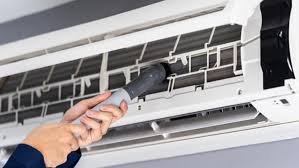
1. Replace or Clean Your Air Filter
This is the single most impactful thing a homeowner can do — and the most consistently neglected. A dirty filter restricts airflow, forces the blower motor to work harder, reduces cooling efficiency, and degrades indoor air quality. In Los Angeles, with wildfire smoke, high particulate matter, and year-round allergens, filters accumulate debris faster than in most cities.
- 1-inch standard filters: replace every 30–45 days during peak use
- 4-inch media filters: replace every 6–12 months
- HEPA or high-MERV filters: check monthly, replace every 3–6 months
- Reusable/washable filters: clean, dry fully, and reinstall — never reinstall wet
If you are a TOP CLUB member, filter checks are included in your bi-annual maintenance visits. [Learn more about the TOP CLUB residential membership plan →]
2. Inspect and Clean the Outdoor Condenser Unit
The condenser unit — the large metal box outside your home — releases heat out of your building. Over fall and winter it accumulates leaves, dirt, pollen, and debris between its aluminum fins. This restricts airflow and forces the compressor to run at higher pressures than designed.
- Clear all vegetation and debris within 2 feet of the unit
- Gently rinse the fins with a garden hose from top to bottom at low pressure
- Never use a pressure washer — it bends the delicate fins
- Check that the unit is level — settling can stress the refrigerant lines
- Inspect fins for bending — a fin comb can straighten minor damage
3. Check Refrigerant Levels
Refrigerant is what actually moves heat out of your home. A system low on refrigerant — whether from a slow leak or improper original charge — cannot cool effectively regardless of how clean everything else is. Signs of low refrigerant include ice forming on the lines, warm air from vents despite the system running, and unusually long run cycles.
Checking and adjusting refrigerant is not a DIY task. It requires EPA 608 certification to purchase and handle refrigerants legally in California. If you suspect a refrigerant issue, contact TOP AC for a diagnostic inspection.
4. Clean the Evaporator Coil
Located in your indoor air handler, the evaporator coil absorbs heat from indoor air. Over time it accumulates dust and biological growth, both of which insulate the coil and reduce heat transfer. A dirty evaporator coil is one of the most common causes of reduced cooling capacity — and one homeowners rarely catch because it is hidden inside the cabinet.
Professional coil cleaning involves removing the access panel, applying a no-rinse coil cleaner, and allowing it to drain through the condensate system. It is included in every TOP AC full-service maintenance visit. [See our air conditioning services →]
5. Test the Thermostat and Controls
Switch your thermostat to cooling mode and lower the set point below the current room temperature. The system should initiate within 2–3 minutes. Listen for the outdoor compressor to start. Confirm that cool air is flowing from the registers within five minutes.
- Check battery backup in non-smart thermostats
- Verify the temperature reading is accurate against a separate thermometer
- Test all fan speed settings if applicable
- Consider upgrading to a smart thermostat for improved efficiency and remote control
6. Inspect Ductwork for Leaks and Insulation Issues
The U.S. Department of Energy estimates that typical homes lose 20–30% of conditioned air through duct leaks. In Los Angeles, where attics can reach 140°F in summer, poorly insulated ducts deliver warm, leaky air instead of the cool air your system worked to produce.
Signs of duct problems include uneven room temperatures, higher-than-expected energy bills, and visible tears or disconnections at duct joints. Professional duct sealing with mastic or metal-backed tape is the correct solution — not standard duct tape, which fails under sustained heat. [See our ductwork and ventilation services →]
7. Clear the Condensate Drain Line
As your AC removes humidity from the air, that moisture drains through a condensate line to the outside. A clogged drain line causes water to back up into the drain pan, potentially overflowing into your ceiling or walls. In Los Angeles homes, this is a surprisingly common summer service call.
Pour a cup of diluted white vinegar down the drain access port annually to prevent algae growth. If the line is already clogged, a wet-dry vacuum on the exterior drain outlet can clear minor blockages. Persistent clogs require professional attention.
8. Schedule a Professional Tune-Up
Even if you complete every DIY item above, a certified technician will check electrical connections, measure amperage draws, test capacitors and contactors, verify refrigerant charge with gauges, measure system static pressure, and document performance. This data becomes a baseline — so the following year, any degradation is visible and measurable.
Pre-Season Special Offer: TOP AC is currently offering Mitsubishi Mini-Split installation — 1-ton / 12,000 BTU unit, professional installation by certified technicians, and a 12-year warranty — for $2,499 (regularly $3,500). Pre-season pricing is available for a limited number of slots before summer. Call (855) 999-8672 or book at top-ac.com.
When to Repair vs. Replace Before Summer
Pre-season maintenance sometimes reveals a system that is beyond cost-effective repair. The general industry guideline is the “5,000 rule”: multiply the system’s age in years by the estimated repair cost. If the result exceeds $5,000, replacement is typically the wiser investment.
Additional indicators that favor replacement include a system over 12–15 years old, use of phased-out R-22 refrigerant, multiple component failures in the past two years, and SEER ratings below 13. If your system is borderline, our team provides honest assessments — we will tell you clearly whether repair or replacement makes more financial sense for your situation. [See our AC systems and replacement options →]
Indoor Air Quality: The Component Most Homeowners Overlook
Summer in Los Angeles increasingly means wildfire smoke, elevated ozone, and high particulate counts. Your HVAC system is your primary defense against all of these — but only if it is configured for air quality, not just temperature control.
We recommend upgrading to a high-MERV filtration system (MERV 11–13 for most homes), adding a UV air purifier in the air handler, and for homes with humidity issues, installing a whole-home dehumidifier. These upgrades are most efficiently installed during your pre-season service visit, before the system runs full-time. [Explore our indoor air quality solutions →]
Book Your Pre-Summer AC Service Now
The best time to service your AC is before you need it. Our schedule fills quickly as temperatures rise — typically by late April our earliest available slots are 2–3 weeks out.
TOP AC Inc. serves homeowners and businesses across Canoga Park, Chatsworth, Woodland Hills, Northridge, West Hills, Reseda, and the broader San Fernando Valley.
Call us: (855) 999-8672 Book online: top-ac.com/air-conditioning-services-los-angeles Email: topacheat@gmail.com
TOP CLUB members receive priority scheduling, discounted service rates, and extended warranty coverage. [Join the TOP CLUB today →]
Frequently Asked Questions
How often should I get AC maintenance in Los Angeles? At minimum, once per year in early spring before summer demand peaks. Homes with heavy use, pets, or occupants with allergies benefit from bi-annual service. TOP CLUB members receive two scheduled visits per year as part of their membership.
How much does AC maintenance cost in Los Angeles? A standard AC tune-up typically ranges from $75 to $150 for a basic inspection and cleaning. Full-service maintenance visits including coil cleaning, refrigerant verification, and electrical testing range from $150 to $300. TOP CLUB membership significantly reduces this cost over the year.
What is included in a professional AC tune-up? A thorough tune-up includes filter replacement, evaporator and condenser coil cleaning, refrigerant level check, electrical component inspection (capacitors, contactors, wiring), thermostat calibration, condensate drain clearing, blower motor lubrication, and a written system performance report.
Can I do AC maintenance myself? Homeowners can safely replace filters, clear debris from the condenser, test thermostat operation, and clear the condensate drain line. Tasks involving refrigerant, electrical components, and coil cleaning should be handled by a licensed HVAC technician. Attempting refrigerant work without EPA 608 certification is illegal in California.
How do I know if my AC needs to be replaced rather than serviced? Key indicators include system age over 12–15 years, use of phased-out R-22 refrigerant, repair estimates exceeding $1,500 on a system older than 8 years, SEER ratings below 13, or recurring failures across multiple components in a single season. Our technicians provide honest, straightforward assessments on every visit.
What is the best AC system for Los Angeles weather? For most homes in the San Fernando Valley, a Mitsubishi Electric mini-split or a high-SEER central system from Trane (Platinum 17, 18, or 20 series) performs best given LA’s climate profile. Mini-splits are ideal for room-by-room control and homes without existing ductwork. Central variable-speed systems handle whole-home cooling most efficiently.