
August 4, 2026
Studio City Summers Are Quieter Than the Valley – But Your AC Still Has Work to Do
Studio City has a split personality when it comes to climate. The flatland streets near Ventura Boulevard behave like the rest of the San Fernando Valley — hot, dry, and demanding on an AC system. But climb into the canyon and hillside streets toward Coldwater Canyon or Laurel Canyon, and the picture changes: cooler mornings, marine-layer influence some days, and a noticeably different workload on the HVAC systems installed there. Neither side gets a free pass, but the reasons why are different enough that a one-size-fits-all Valley guide misses what Studio City homeowners actually need to know.
This guide covers what makes AC service in Studio City, CA different depending on where in the neighborhood you live, and the hillside-specific installation and access challenges that flatland guides don’t address.
Two Climates, One Zip Code
Studio City’s terrain runs from the flat commercial and residential streets near Ventura Boulevard up into the canyon foothills bordering the Hollywood Hills. That elevation change creates real microclimate variation within a single neighborhood.
| Area | Typical Summer Conditions | HVAC Implication |
|---|---|---|
| Flatland streets near Ventura Blvd | Hot, dry, similar to broader Valley heat patterns | Standard Valley-style cooling demand; systems run long, steady cycles through summer afternoons. |
| Canyon and hillside streets | Cooler mornings, occasional marine layer, more shade from tree cover | Lower average cooling load but more variable day-to-day demand, and systems here often face different install and access constraints. |
Homeowners moving between these two parts of Studio City are sometimes surprised their new home’s AC habits don’t match their old one’s, even within the same zip code.
Why Hillside Homes Need a Different HVAC Approach
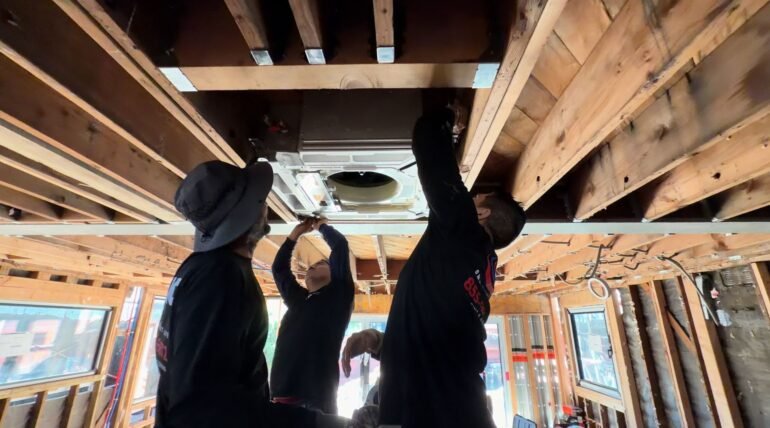
Studio City’s canyon and hillside properties present installation and service challenges that flatland homes simply don’t have. These factors matter as much as climate when planning HVAC service in this part of the neighborhood.
| Hillside Factor | HVAC Impact |
|---|---|
| Homes built on stilts or with limited attic/crawlspace access | Traditional ducted central air is harder or more expensive to install and service, making ductless mini-split systems a common and often preferable choice for hillside properties. |
| Narrow, winding canyon roads | Equipment delivery and replacement can require smaller trucks, longer carry distances, or additional scheduling coordination compared to flatland service calls. |
| Steep lots and multi-level construction | Outdoor condenser placement is often more constrained, affecting airflow clearance and service access for future repairs. |
| Noise sensitivity | Given the concentration of entertainment industry professionals working from home in this area, quieter system operation is a more frequent priority than in many other neighborhoods. |
Signs Your Studio City System Needs Attention
| Warning Sign | What It Usually Means |
|---|---|
| System is noticeably louder than it used to be | Often a sign of a failing fan motor or a compressor working harder than it should — worth addressing quickly in homes where quiet operation matters for home studios or remote work. |
| Flatland home struggles to keep up on hot afternoons | Standard sign of a capacitor issue, refrigerant leak, or a system that’s simply aging out — the same diagnostic priorities as broader Valley heat patterns. |
| Hillside mini-split loses efficiency or ices up | Can indicate a refrigerant issue or airflow restriction specific to ductless systems, which require different diagnostic steps than central air. |
| Uneven comfort between floors on a multi-level hillside home | Common when a single system or zone wasn’t designed to handle a steep, multi-level floor plan — often solved with zoning adjustments rather than a full system replacement. |
What a Proper Studio City HVAC Service Visit Should Include
| Service Item | Why It Matters Locally |
|---|---|
| System type assessment (central vs. ductless) | Determines the right diagnostic and repair approach given how common ductless mini-splits are on Studio City’s hillside properties. |
| Access and equipment placement review | Confirms outdoor unit clearance and service access on steep or multi-level hillside lots before repair or replacement work begins. |
| Noise diagnostic for hillside systems | Given how many Studio City homeowners work from home in sound-sensitive professions, unusual noise is worth investigating even before it becomes a performance problem. |
| Refrigerant level check and leak inspection | Standard across both flatland and hillside systems, though ductless mini-splits require different service tools and refrigerant handling than central air. |
| Written report of findings | Especially useful when comparing central air versus mini-split replacement options on a hillside property. |
What HVAC Service Typically Costs in Studio City
| Service Type | Typical Cost Range | Notes |
|---|---|---|
| Capacitor replacement | $150 to $400 | Applies to both central air and ductless systems; a common flatland Studio City repair. |
| Refrigerant leak repair | $400 to $1,500 | Cost varies by system type and accessibility, which can be more involved on hillside installations. |
| Ductless mini-split diagnostic and repair | Varies by issue | A common system type on Studio City’s hillside properties, requiring specialized service compared to central air. |
| Hillside access surcharge (where applicable) | Varies by property | Some canyon properties require additional time or equipment for access, which may factor into total repair cost. |
| Diagnostic / dispatch fee (non-member) | $89 to $200 | Standard trip and diagnostic charge, typically waived or reduced for maintenance plan members. |
TOP CLUB Membership for Studio City Homes
Whether you’re on the Valley-floor side of Studio City or up in the canyons, a maintenance plan built around priority scheduling and reduced diagnostic fees helps avoid the access-and-scheduling complications that can turn a simple hillside repair into a multi-day wait.
| TOP CLUB Tier | Monthly Rate | Key Included Benefits |
|---|---|---|
| TOP SMART | $15 per month | Annual tune-up ($300 value), priority booking, $65 diagnostic (standard $125), $165 after-hours rate (standard $250), 1-year labor warranty, 40% off accessories |
| TOP COMFORT | $27 per month | Annual tune-up, priority booking, $45 diagnostic, $135 after-hours rate, 15% off all repairs, 2-year labor warranty, 40% off accessories |
| TOP ELITE | $35 per month | Annual tune-up, VIP priority scheduling, $20 diagnostic, $120 after-hours rate, 25% off all repairs, 2-year labor warranty, 40% off accessories |
See full membership details on the TOP CLUB Residential Membership page, explore our AC Systems services for both central and ductless options, and see our full list of Los Angeles-area service locations including Studio City.
Frequently Asked Questions
Does Studio City have one climate or two?
Effectively two. Flatland streets near Ventura Boulevard experience standard San Fernando Valley heat patterns, while canyon and hillside streets toward Coldwater Canyon and Laurel Canyon see cooler mornings and more variable conditions due to elevation and marine layer influence.
Why are ductless mini-splits so common in Studio City?
Many hillside homes are built on stilts or have limited attic and crawlspace access, making traditional ducted central air harder and more expensive to install. Ductless mini-split systems avoid this constraint and are a common choice for hillside properties in this neighborhood.
How much does AC service cost in Studio City, CA?
Most repairs range from $150 for a capacitor replacement to $1,500 or more for a refrigerant leak repair. Ductless mini-split service and hillside access considerations can affect total cost depending on the property. A diagnostic visit confirms the exact scope.
Does TOP AC Inc. service hillside properties in Studio City?
Yes. TOP AC Inc. services both flatland and hillside Studio City properties, including central air and ductless mini-split systems, with technicians equipped for the access and installation considerations specific to canyon terrain. Call (855) 999-8672 to schedule service.
Why does my hillside home’s AC sound louder than my flatland friend’s system?
Outdoor unit placement on steep or multi-level lots can be more constrained, sometimes affecting airflow clearance and perceived noise. A worn fan motor or an aging compressor can also cause increased noise regardless of property type, and both are worth a diagnostic check.
Serving Studio City, Flatland and Hillside
TOP AC Inc. brings licensed, certified HVAC expertise to Studio City’s full range of terrain — from Ventura Boulevard’s flatland streets to the canyon homes above, with technicians equipped for both standard central air service and the access challenges hillside properties present.
📞 Call us at (855) 999-8672
🌐 top-ac.com
📍 21201 Victory Blvd, Suite 102, Canoga Park, Los Angeles, CA 91303
🕐 Available 24/7 — Residential and Commercial
Call today to schedule AC service, or ask about TOP CLUB membership built for wherever your Studio City home sits on the hill.