

October 15, 2026
Whole Home Air Filtration Guide for Valley Homes
A closed window does not guarantee clean air. Dust from a busy week, pet dander, spring pollen, cooking particles, and seasonal wildfire smoke can still circulate through the HVAC system many times a day. This whole home air filtration guide explains what actually improves indoor air, what can strain your equipment, and how to choose a setup that fits your home instead of chasing a label on a box.
For households in Canoga Park, Woodland Hills, Tarzana, and nearby Valley communities, the right answer often depends on more than allergies. It depends on your ductwork, the condition of the system, how often you run cooling, whether anyone has asthma, and whether your home has rooms that collect dust faster than others.
What Whole-Home Filtration Does Differently
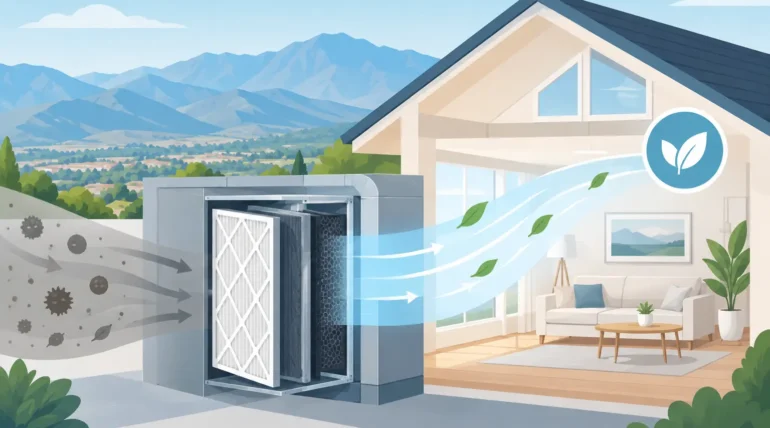
A whole-home air filtration system works with your central heating and cooling equipment. As air returns to the system to be heated or cooled, it passes through a filter installed in or near the return duct. That means the system can capture particles repeatedly throughout the home whenever the blower runs.
A portable air cleaner can be useful for one bedroom, a nursery, or a home office. It has limits, though. It only treats the air in the room where it operates, and it does not protect the HVAC equipment from dust buildup. Whole-home filtration addresses the air moving through the system itself.
That does not mean every home needs an advanced purifier or the highest-rated filter available. Filtration is a balance between cleaner air and proper airflow. A filter that is too restrictive for an older system, undersized return duct, or weak blower can reduce comfort, increase operating stress, and contribute to avoidable repairs.
Whole Home Air Filtration Guide: Start With the Filter
The filter is usually the first and most practical decision. Its MERV rating indicates how effectively it captures particles of different sizes. A higher number generally captures finer particles, but it may also create more resistance to airflow.
For many homes, a quality pleated filter in the MERV 8 to MERV 11 range is a sensible starting point. It can capture common household dust, pollen, lint, and some pet dander without being unnecessarily restrictive for most properly maintained residential systems. A MERV 13 filter can provide stronger filtration for finer particles, including some smoke-related particles, but it should be selected only after confirming the HVAC system can handle it.
Fiberglass filters are inexpensive and allow easy airflow, but they are mainly intended to protect equipment from larger debris. They do less for the particles that leave furniture dusty, irritate allergies, or linger indoors after outdoor air quality declines.
The filter’s physical size matters as much as the rating. A deeper media filter, often four or five inches thick, has more surface area than a standard one-inch filter. More surface area can improve particle capture while reducing the pressure drop compared with forcing everything through a thin, dense filter. It also may need replacement less often, though it still requires regular inspection.
Before increasing filtration, have a qualified HVAC technician check the return-air setup, blower performance, duct condition, and manufacturer recommendations. This is not a one-size-fits-all upgrade. A filter that works well in a newer, properly sized system may not be the right choice for a system with restricted returns or existing airflow issues.
Filtration, Purification, and Ventilation Are Not the Same
These terms are often used together, but they solve different problems.
Filtration physically captures particles as air passes through a filter. It is the foundation of a cleaner indoor-air strategy because every central system needs a filter anyway.
Air purification may use technologies designed to address odors, gases, or certain airborne contaminants that ordinary filters do not capture effectively. The right technology and placement matter. Homeowners should be cautious about products that make broad health claims or promise to eliminate every indoor-air issue. A professional should explain what the equipment is designed to do, what it cannot do, and whether it is appropriate for the home.
Ventilation brings in outdoor air or exhausts stale indoor air. It can help with moisture, lingering odors, and indoor pollutants from daily activities, but outdoor conditions matter. During high-pollen days or smoke events, bringing in untreated outdoor air may not be the best approach. The best plan often combines controlled ventilation, appropriate filtration, and good source control.
Source control is the straightforward part: use the kitchen exhaust fan while cooking, avoid smoking indoors, vacuum with effective filtration, manage pet grooming, and address moisture problems before mold becomes an air-quality concern. No HVAC accessory can fully compensate for an active indoor pollutant source.
Signs Your Current Setup Is Not Keeping Up
Visible dust is not the only signal. You may need a filtration review if family members notice more allergy symptoms indoors, rooms smell stale when the system starts, or furniture gathers a layer of dust soon after cleaning. Excessive dust around supply vents can also point to filter, duct, or housekeeping issues.
System symptoms deserve attention, too. A whistling return grille, weak airflow from vents, unusually hot or cold rooms, rising utility bills, or a filter that looks heavily loaded after only a few weeks can indicate that the system is struggling with airflow. Installing a denser filter without investigating those symptoms can make the underlying issue worse.
If you use a smart thermostat, pay attention to longer run times and comfort changes after switching filter types. Longer operation is not automatically a problem during a heat wave, but a sudden change after a filter upgrade is worth checking.
A Better Replacement Schedule
“Change it every three months” is a useful rule of thumb, not a guarantee. One-inch filters in homes with pets, frequent system use, construction nearby, or allergy concerns may need attention monthly. A lightly used vacation property may go longer. Deep media filters may last several months, depending on their rating and household conditions.
The practical approach is simple: check the filter on a schedule, then replace it when it is visibly loaded or according to the manufacturer’s guidance. Do not wait until it collapses, bows inward, or turns dark gray. A neglected filter can reduce airflow and allow dust to accumulate on indoor components, where cleaning is more involved.
Always install the filter with the airflow arrow pointing toward the equipment. Using the wrong size, leaving gaps around the frame, or forcing a bent filter into place lets unfiltered air bypass the media. It is a small detail with a real effect on both air quality and system cleanliness.
When a Professional Assessment Makes Sense
A whole-home filtration upgrade is most valuable when it is part of a clear diagnosis. A technician can inspect the filter cabinet, confirm whether the return ducts are sized correctly, check whether the blower can support a higher-efficiency filter, and look for duct leaks that pull dusty attic or crawl-space air into the system.
This is especially useful after remodeling, when moving into an older home, when replacing an HVAC system, or when a household member has persistent respiratory sensitivities. It is also a good time to discuss whether insulation gaps, duct leakage, or poor airflow are contributing to comfort and air-quality concerns.
TOP AC provides indoor air quality evaluations and all-brand HVAC service for homeowners throughout Canoga Park and surrounding Valley communities. A licensed assessment can separate useful improvements from add-ons that do not fit your system or your needs.
Cleaner air should not come at the expense of dependable heating and cooling. Start with the filter your system can support, replace it before it becomes a restriction, and ask for a professional evaluation when dust, smoke, odors, or comfort problems keep returning.