
November 2, 2026
Best Commercial HVAC Upgrades for Lower Bills
A hot afternoon should not turn your retail floor, office, or multi-unit property into a comfort complaint line. The best commercial HVAC upgrades solve the problems that affect your operation every day: uneven temperatures, rising utility costs, stale air, surprise breakdowns, and equipment that cannot keep up when the San Fernando Valley heats up.
For a commercial property, the right upgrade is rarely just a bigger unit. It is a properly matched improvement that fits the building, occupancy, operating hours, and existing equipment. A system that is oversized, poorly controlled, or neglected can waste energy even when it is relatively new. The goal is reliable comfort without paying to condition empty rooms or constantly reacting to emergencies.
Start With the Problem, Not the Equipment
Before choosing new equipment, identify what is actually failing. A restaurant with heat buildup near the kitchen has different needs than a Woodland Hills medical office with hot and cold exam rooms. A retail center in Canoga Park may need better zoning, while an older office building in Encino may have duct leakage, failing controls, or rooftop units nearing the end of their useful life.
A professional commercial HVAC assessment should look beyond the thermostat. It should consider equipment age and condition, utility use, airflow, ductwork, ventilation, maintenance history, occupancy patterns, and the way each area feels during peak heat. This diagnosis protects you from replacing one expensive component while leaving the real source of the problem in place.
Replacement can be the right answer, but it is not always the first answer. If a unit is fundamentally sound, a controls upgrade, ventilation correction, or targeted repair may deliver meaningful improvement at a lower initial cost. Honest recommendations should explain both the immediate fix and the longer-term value.
High-Efficiency Rooftop Unit Replacement
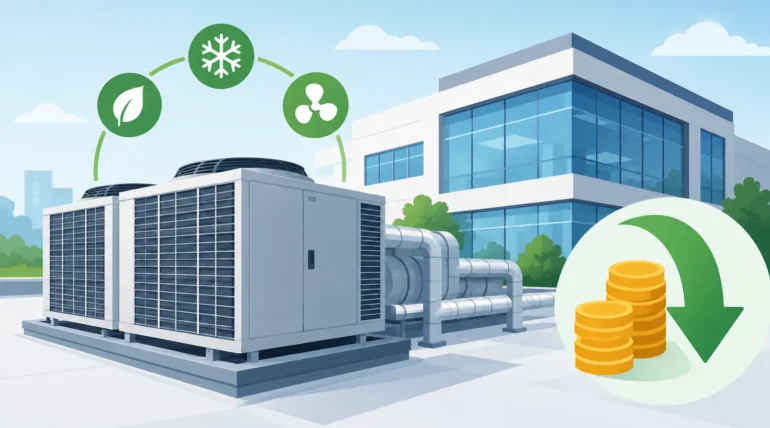
For many offices, retail locations, warehouses, and multi-tenant properties, replacing an aging rooftop package unit is one of the most valuable commercial HVAC upgrades. Older units often run longer than necessary, struggle to hold temperature during heat waves, and require increasingly frequent repairs.
Modern high-efficiency equipment can reduce energy waste through improved compressors, fan motors, and smarter operation. The benefit is not simply a lower utility bill. Reliable cooling helps protect employee productivity, customer comfort, inventory conditions, and tenant satisfaction.
Proper sizing matters as much as efficiency ratings. A unit that is too small will run constantly in extreme weather. One that is too large may cycle on and off too quickly, remove less humidity, and wear components prematurely. A load calculation and site-specific review help determine what the building needs now, not what happened to be installed years ago.
When Replacement Makes Sense
Consider a replacement discussion when repair calls are becoming routine, parts are difficult to source, comfort is inconsistent, or the unit has reached an age where major repairs no longer offer good value. The decision also depends on how long you plan to own or manage the property. A short-term repair may be reasonable for one owner, while another may benefit from a planned replacement that improves operating costs and reduces disruption.
Smart Thermostats and Building Controls
A commercial HVAC system cannot operate efficiently if it is told to cool every space the same way, all day and night. Smart thermostats and commercial controls allow managers to set schedules, monitor temperatures, and reduce unnecessary runtime.
For example, an office may need full cooling before employees arrive, but not for hours after everyone leaves. A retail business may have different comfort needs on weekends than on weekdays. Controls can align HVAC operation with the building’s actual schedule instead of relying on manual thermostat adjustments that are forgotten, overridden, or set too aggressively.
The best control upgrade depends on the size and layout of the property. A small professional office may benefit from programmable thermostats and remote monitoring. A larger building with multiple zones may need integrated controls that coordinate several rooftop units or split systems. Good controls also help identify problems early, such as a unit running outside scheduled hours or a zone that never reaches its set temperature.
Zoning for Uneven Temperatures
Hot and cold spots are common in commercial buildings, especially those with large windows, different sun exposure, server rooms, conference rooms, or a mix of occupied and lightly used spaces. If one thermostat controls areas with very different loads, someone is almost always uncomfortable.
Zoning divides the building into areas that can be controlled independently. This may involve separate thermostats, motorized dampers, equipment changes, or a ductless solution for a difficult space. The result is more precise comfort and less wasted cooling.
Zoning is particularly useful when one section of a property operates longer hours than another. Rather than conditioning an entire suite for a few employees, the system can focus on the occupied area. However, zoning must be designed carefully. Adding dampers without considering airflow and equipment capacity can create new performance issues. It should be planned as part of a complete system evaluation.
Variable-Speed and Ductless Systems
Variable-speed systems adjust output more gradually than equipment that is simply on or off. That can improve comfort in spaces with changing loads, reduce temperature swings, and allow quieter operation. These systems are often a strong option for offices, specialty rooms, additions, and properties where consistent comfort matters throughout the day.
Ductless mini-split systems can also be an effective targeted upgrade. They are useful for rooms that existing ductwork does not serve well, such as a converted office, an equipment room, a tenant improvement area, or a space with persistent heat from electronics. As a Mitsubishi Electric Diamond Dealer, TOP AC can help commercial property owners evaluate whether a ductless or variable-speed solution fits the application.
There are trade-offs. Ductless equipment is not automatically the best whole-building answer, and its indoor units need thoughtful placement and regular maintenance. But where extending or rebuilding ductwork would be disruptive, it can provide a practical way to improve a problem area without overhauling everything else.
Ventilation and Indoor Air Quality Improvements
Comfort is about more than the temperature on the thermostat. Stuffy rooms, odors, excess dust, and poor ventilation can affect how employees and customers experience a space. In tightly sealed buildings, the balance between fresh outdoor air, filtration, and conditioned air needs careful attention.
Commercial indoor air quality upgrades may include improved filtration, air purification equipment, ventilation adjustments, and duct improvements. The right option depends on the building’s use. A high-traffic retail space, an office with frequent meetings, and a multi-unit property may each need a different approach.
Do not assume that higher-grade filtration can be added without review. Filters that are too restrictive for the system can reduce airflow and strain equipment. A qualified technician can recommend filtration that supports cleaner air while allowing the HVAC system to operate correctly.
Ductwork Repairs and Insulation Upgrades
Conditioned air is expensive. If ductwork is leaking, poorly insulated, crushed, or disconnected, part of that investment may be going into unoccupied areas instead of the spaces your business uses. Duct repairs and insulation improvements are often overlooked because they are out of sight, but they can have a direct effect on comfort and equipment runtime.
In older commercial spaces, ductwork problems can explain why a newer unit still performs poorly. Sealing leaks, correcting airflow restrictions, and insulating ducts where appropriate can help rooms cool more evenly. For certain properties, attic or crawl space insulation may also reduce heat transfer into the building and ease the load on the HVAC system.
Maintenance Protects Every Upgrade
New equipment and controls perform best when they are maintained. Filters, coils, drains, belts, electrical connections, refrigerant levels, and safety controls all need regular attention. Skipping service can turn a high-efficiency upgrade into another source of costly downtime.
Commercial maintenance should be scheduled around your business needs, with clear reporting on what was inspected, what was corrected, and what may need planning in the future. TOP CARE commercial maintenance gives property owners a more proactive way to protect equipment, budget for future needs, and reduce the chance of a disruption during peak cooling season.
Choose Upgrades That Match Your Building Plan
The best investment is the one that solves a verified problem and supports the way your property operates. If an aging rooftop unit is unreliable, replacement may come first. If cooling is generally adequate but certain rooms are uncomfortable, zoning or a ductless system may provide better value. If energy use is high despite newer equipment, controls, ductwork, and maintenance deserve a closer look.
For businesses in Canoga Park, Tarzana, Northridge, Woodland Hills, and nearby communities, a clear on-site assessment can replace guesswork with a practical plan. Ask for a diagnosis that explains the condition of your current system, the options available, and the trade-offs behind each recommendation. Comfortable customers, productive employees, and predictable operating costs are worth building toward before the next heat wave arrives.