
November 6, 2026
Commercial HVAC Maintenance in Chatsworth
A packed restaurant dining room, an office full of computers, or a retail space with sun-facing windows can put serious strain on a commercial HVAC system in Chatsworth. When cooling drops on a hot afternoon, the problem is not just mechanical. Employees lose focus, customers leave sooner, tenants call, and business owners are forced to make a rushed decision. Commercial HVAC maintenance Chatsworth property owners schedule ahead of time helps prevent those high-pressure moments.
The goal is not to service equipment simply because the calendar says so. Good maintenance gives you a clearer picture of how the system is operating, catches small issues before they become disruptive repairs, and helps protect the comfort people expect when they enter your building.
Why Commercial HVAC Maintenance Matters in Chatsworth
Chatsworth businesses deal with long cooling seasons, dust, temperature swings, and heavy demand during heat events. Rooftop units, split systems, heat pumps, package units, and multi-zone equipment all work harder when outdoor temperatures rise. A system that seems fine during mild weather may struggle once every thermostat is calling for cooling at the same time.
Maintenance reduces the chance that a minor condition turns into an interruption. A clogged filter can restrict airflow. Loose electrical connections can create heat and wear. A drain line issue can lead to water damage or a shutdown. A thermostat or control issue can leave one area uncomfortable while another is overcooled. None of these problems is guaranteed to cause a breakdown, but finding them early gives the owner more options.
That flexibility matters. Planned service lets you approve necessary work on a reasonable timeline instead of making decisions during an urgent failure. It can also help extend equipment life, support more consistent energy use, and make budgeting for a large property easier.
What a Commercial HVAC Maintenance Visit Should Cover
Commercial equipment is not one-size-fits-all, so the exact scope depends on your system, its age, its workload, and the type of building you operate. A small professional office has different demands than a busy retail storefront, warehouse, medical office, or multi-tenant property.
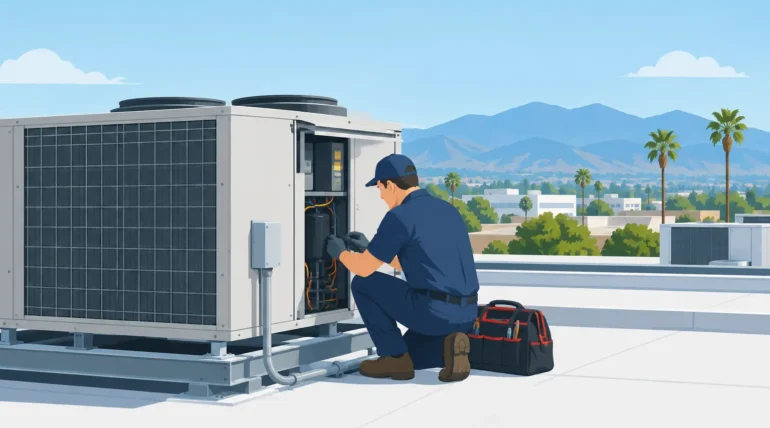
A qualified technician should start by looking at overall performance rather than treating maintenance as a quick filter change. That typically includes checking cooling and heating operation, airflow, thermostat response, electrical components, condensate drainage, accessible coils, belts where applicable, and visible signs of wear. Filters should be evaluated based on condition and the building’s needs, not merely replaced without considering the source of the buildup.
The visit should also include a conversation. Are certain rooms always warmer than others? Has the utility bill changed? Do occupants notice odors, noise, humidity, or inconsistent temperatures? Those details can point to issues that are not obvious during a short equipment test.
For larger facilities or properties with multiple units, documentation is especially useful. Knowing which unit serves which area, what was observed, and what may need attention next helps facility managers avoid losing track of repeat concerns.
Maintenance Is More Than a Tune-Up
A tune-up focuses on verifying that the equipment is operating correctly at that moment. Ongoing maintenance is broader. It creates a service history, establishes recurring inspections, and gives the technician a chance to spot patterns such as frequent drain clogs, recurring airflow restrictions, or a unit that is gradually losing capacity.
That difference becomes meaningful when equipment is older. Maintenance cannot make an aging unit new, and it will not eliminate every repair. It can, however, help you plan for repair versus replacement with better information and less pressure.
How Often Should a Commercial System Be Serviced?
For most Chatsworth commercial properties, twice-yearly maintenance is a sensible starting point: once before the heaviest cooling season and once before heating demand increases. Systems that run long hours, serve high-occupancy spaces, or operate in dustier environments may need more frequent filter checks and inspections.
A restaurant, fitness studio, daycare, or high-traffic retail location may have very different maintenance needs than a lightly used office suite. The same applies to buildings with specialized ventilation requirements or equipment that supports server rooms, tenant common areas, or production spaces.
The right schedule depends on runtime, occupancy, equipment type, indoor air quality goals, and the cost of downtime. If one failed unit can shut down a key part of your operation, more frequent oversight is often worthwhile. If a system is newer and lightly used, a practical twice-yearly plan may be enough.
Warning Signs to Address Before the Next Heat Wave
Not every HVAC concern requires an emergency call, but waiting for a complete failure is rarely the best approach. Schedule an assessment if the building has recurring hot or cold spots, weak airflow, unusual rattling or buzzing, water around indoor equipment, frequent thermostat adjustments, or a sudden rise in energy use.
Odors deserve attention as well. A musty smell may be related to moisture, drainage, or dirty components. A burning or electrical smell calls for prompt professional evaluation. If your system repeatedly trips breakers, shuts down, or cannot maintain the set temperature, it is time to have a licensed HVAC contractor diagnose the cause.
Avoid asking maintenance staff to handle refrigerant, electrical repairs, or internal equipment adjustments unless they are properly qualified for that work. Commercial systems involve safety requirements, controls, and components that need professional diagnosis. The right repair begins with identifying the actual cause, not replacing parts based on a guess.
Protecting Comfort Without Wasting Energy
Commercial HVAC maintenance is closely tied to energy management, but lower utility use should not come at the cost of occupant comfort. Turning settings too far up in summer or too far down in winter can create complaints and encourage employees or tenants to use portable equipment that adds more strain elsewhere.
Instead, focus on controlled operation. Confirm that schedules match building hours, thermostats are located and programmed appropriately, filters are changed as needed, and doors or loading areas are not allowing large amounts of conditioned air to escape. If certain zones are consistently uncomfortable, the answer may involve airflow balancing, controls, insulation, equipment capacity, or a combination of factors.
A professional assessment should be honest about those trade-offs. Sometimes a repair is the practical choice. Sometimes a targeted improvement can solve a comfort problem. And sometimes an older system is reaching a point where repeated repairs no longer make financial sense. Clear findings and transparent recommendations help owners make that call with confidence.
Choosing a Commercial HVAC Maintenance Partner
For a business or property manager, reliability means more than arriving when something breaks. Look for a licensed and insured contractor with commercial experience across equipment brands and system types. Ask whether the company can provide recurring maintenance, clear service records, straightforward findings, and support when an unexpected problem develops.
Response time matters, but so does the quality of the diagnosis. A rushed visit that overlooks the real cause of a comfort issue can create repeat calls and more disruption. The better approach is to inspect the system carefully, explain what was found in plain language, and distinguish between urgent repairs, recommended maintenance, and items that can be monitored.
TOP AC Inc. provides commercial maintenance through its TOP CARE program for businesses that want planned service, dependable scheduling, and priority support when comfort cannot wait. As a family-owned, licensed, and insured contractor serving Chatsworth and nearby San Fernando Valley communities, the team works on all brands and unit types with clear communication from diagnosis through completion.
Build Maintenance Around Your Business Calendar
The best time to schedule maintenance is before you need the system at full output. For many businesses, that means planning cooling service before extended heat arrives and arranging heating checks before cooler weather settles in. Property managers may also want to coordinate service around tenant hours, events, deliveries, or seasonal occupancy changes.
A thoughtful maintenance plan protects more than equipment. It helps protect your staff, tenants, customers, and daily operations. When your HVAC system has been inspected, documented, and cared for before the pressure is on, you can spend less time reacting to comfort problems and more time running the business.