
October 21, 2026
Emergency Heating Options When Your Furnace Fails
A furnace failure on a cold night is more than an inconvenience, especially when children, older adults, or pets are in the home. The best emergency heating options are the ones that keep your household safe while you arrange a proper repair, not the ones that create a second emergency through fire, carbon monoxide, or overloaded circuits.
In Canoga Park, Woodland Hills, Tarzana, and nearby Valley communities, winter nights can feel surprisingly cold indoors when a heater stops working. Start by protecting people and plumbing, use temporary heat carefully, and call a licensed HVAC professional if the system will not restart safely.
Start With Safety Before Temporary Heat
If your furnace repeatedly shuts down, smells like burning plastic, makes loud banging or screeching sounds, or trips a breaker, turn it off rather than continuing to reset it. A brief dusty smell when a heater starts for the first time in a season can be normal. Persistent burning odors, smoke, or electrical smells are not.
A gas-like odor requires a different response. Leave the building, avoid switches, flames, and electronics, and contact the gas utility or emergency services from a safe location. Do not try to locate the leak yourself or operate the furnace again until it has been cleared for use.
Every home with fuel-burning equipment should have working carbon monoxide alarms near sleeping areas and on each level of the home. Carbon monoxide has no smell and can cause headache, dizziness, nausea, confusion, or flu-like symptoms. If an alarm sounds or anyone feels unwell, get everyone outside and seek emergency assistance. Do not reenter simply because the symptoms improve.
Emergency Heating Options That Work Safely
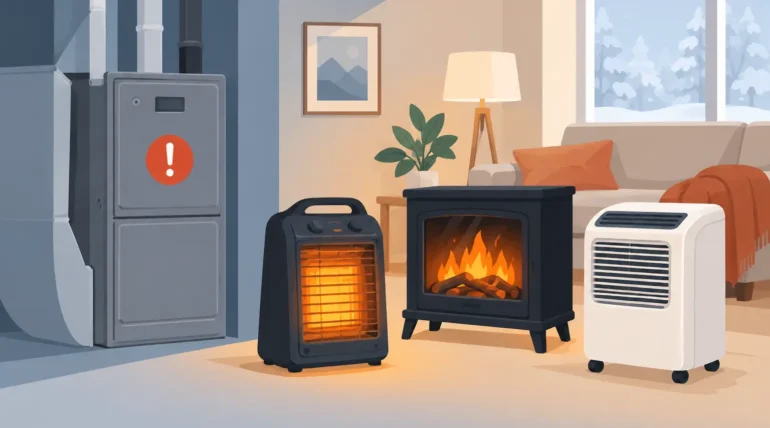
The right temporary solution depends on the size of the space, who is in the home, how long the outage may last, and whether you still have electrical power. Think in terms of warming people and one or two occupied rooms, not trying to replace a whole-home heating system with a portable device.
Electric space heaters for a single occupied room
A modern electric space heater can be a reasonable short-term choice for a bedroom, office, or living room when used exactly as intended. Choose a unit with tip-over protection and automatic shutoff. Plug it directly into a wall outlet, place it on a flat, hard surface, and keep at least three feet of clear space around it.
Do not plug a space heater into an extension cord, power strip, or overloaded outlet. Do not run its cord under a rug, leave it operating while you sleep, or use it near curtains, bedding, upholstered furniture, or laundry. If the plug, outlet, or cord becomes hot, turn the heater off and stop using that outlet.
For many households, one properly used space heater plus closed doors is safer and more effective than several heaters spread across the house. Keep children and pets away from the unit, and use extra caution in homes with limited electrical capacity.
Heat pumps and ductless mini-splits
If your central furnace is down but you have a separate ductless mini-split or heat pump serving part of the home, that system may provide dependable temporary warmth. Set it to heating mode, keep doors and windows closed, and avoid constantly changing the thermostat setting. A heat pump can take time to raise room temperature, particularly after the home has been cold for hours.
This option only works if the equipment is operating normally. Ice buildup, unusual noises, repeated shutdowns, or poor airflow are reasons to schedule service rather than push the system harder. A well-maintained heat pump can be an excellent backup source, but it should not be relied on when it is showing signs of a fault.
Layered warmth and room-by-room living
When heating is limited, concentrate activity in the warmest safe room. Close interior doors to unused rooms, use blankets and warm clothing, and serve warm drinks or meals if it is safe to do so. Heavy curtains or closed blinds can reduce heat loss after sunset, while a sunny window can provide some daytime warmth.
This approach sounds simple because it is. It also reduces the temptation to use unsafe heat sources. For a short outage in a mild Valley winter, layered clothing, bedding, and a safely operated space heater can often keep a family reasonably comfortable until repair service arrives.
A hotel, family home, or alternate location
Sometimes the safest emergency heating option is leaving the house for the night. Consider an alternate location when indoor temperatures are falling quickly, the outage may last beyond a few hours, or someone in the household is medically vulnerable. Infants, seniors, people with certain health conditions, and pets may need a warmer environment sooner than healthy adults.
Property owners should also think about vacant units and buildings with exposed pipes. Cold indoor conditions can create preventable damage, even in Southern California. If a property will be unoccupied during a prolonged outage, seek professional guidance promptly.
Heat Sources to Avoid Indoors
A cold house can lead people to make risky choices. Never use an oven, range, barbecue grill, charcoal grill, fire pit, or outdoor patio heater to warm indoor spaces. These appliances can create dangerous levels of carbon monoxide, consume oxygen, or start a fire.
Portable propane or kerosene heaters should never be brought indoors unless the specific model is expressly rated for indoor use and you can follow every manufacturer safety requirement. Even then, ventilation, clearances, fuel storage, carbon monoxide detection, and supervision matter. For most homeowners facing a furnace breakdown, an electric space heater or an alternate warm location is the simpler and lower-risk choice.
Generators also belong outdoors, far from doors, windows, and vents. They are not an indoor heating solution, and they should not be used in a garage, carport, basement, or enclosed patio. Carbon monoxide can enter a home even when a generator is outside but positioned too close to an opening.
Protect Your Home While You Wait
Temporary heat should be paired with basic damage prevention. Keep cabinet doors open below sinks on exterior walls so warmer room air can reach plumbing. Maintain enough indoor warmth to protect vulnerable pipes where possible, particularly in hillside areas or homes with uninsulated crawl spaces.
Close fireplace dampers when the fireplace is not in use, and seal obvious drafts around doors. If you have a wood-burning fireplace that is in good condition and you know how to operate it safely, it can add warmth to one room. Never leave a fire unattended, and do not burn inappropriate materials such as treated wood, painted lumber, cardboard, or trash.
Avoid repeatedly cycling a malfunctioning furnace. Changing filters, confirming the thermostat is set to heat, and checking that accessible vents are open are reasonable homeowner checks. Beyond that, a system that will not run, blows cold air, or shuts off again needs diagnosis. Continued resets can worsen a problem or hide a safety issue.
When a Heating Repair Cannot Wait
Same-day HVAC service is worthwhile when there is no heat during cold weather, the system is short-cycling, airflow has stopped, the furnace is making unusual noises, or there is a concern about gas, electrical components, or carbon monoxide. Commercial properties should act quickly as well, since cold work areas, tenant complaints, and unprotected equipment can turn a small failure into a larger disruption.
A qualified technician should identify the cause before recommending a repair or replacement. Common issues can involve ignition components, sensors, blower motors, thermostats, airflow restrictions, or electrical controls. The solution depends on the system’s condition, age, maintenance history, and the nature of the failure. Honest diagnosis matters because the fastest recommendation is not always the right long-term answer.
TOP AC provides licensed heating service for homeowners and businesses throughout Canoga Park and surrounding communities, with same-day availability and 24/7 emergency support. Clear communication about the issue, the available repair path, and the condition of the equipment helps you make a confident decision without guessing.
Prepare Before the Next Cold Night
The easiest heating emergency to handle is the one that never develops. Schedule annual heating maintenance before the cooler season, replace filters on schedule, keep supply and return vents clear, and test carbon monoxide alarms regularly. A tune-up can catch worn parts, combustion concerns, and airflow problems before the first cold evening puts the system under demand.
Keep one safe space heater available for true short-term use, along with blankets, flashlights, fresh alarm batteries, and a plan for where vulnerable family members could stay if the house becomes too cold. When your heater fails, focus first on safe warmth, then let a trained professional restore the dependable comfort your home needs.