
November 15, 2026
How to Prepare Your Furnace for Winter
Knowing how to prepare your furnace for winter starts with a clean filter, clear space around the equipment, working thermostat, and a professional tune-up before the first cold night. Test the system early, because a furnace that has been sitting unused can reveal problems only when it is asked to run.
For homeowners in Canoga Park and across the San Fernando Valley, heating may not run for months at a time. That makes the first cool evening a poor time to discover a weak igniter, dirty filter, or thermostat issue. A little preparation helps protect comfort, indoor air quality, and your household budget.
Why Furnace Preparation Matters in Southern California
Our winters are milder than those in colder climates, but that does not mean heating problems are rare. Valley homes can swing from hot, dry afternoons to chilly nights, especially in older neighborhoods where insulation and equipment condition vary widely. Santa Ana winds and wildfire smoke can also put extra dust and particles into the home, increasing the burden on filters.
A furnace does not need to run every day to develop a problem. Dust can settle on internal components, batteries can fail, drain lines can clog on high-efficiency equipment, and small electrical or ignition issues can go unnoticed until the system starts cycling. Preparing early gives you time to schedule service during regular business hours instead of waiting through an uncomfortable night.
How to Prepare Your Furnace for Winter Safely
Most preparation steps are simple homeowner checks. They are not a substitute for a licensed heating inspection, especially if you smell gas, hear unusual noises, or the system fails to start.
1. Replace or inspect the air filter
Start with the filter. A clogged filter restricts airflow, which can make a furnace run longer, heat unevenly, or shut down on a safety limit. Check the arrow on the filter frame before installing a new one. The arrow should point toward the furnace or air handler, in the direction air flows.
How often a filter needs replacement depends on its type, household size, pets, and airborne dust. Check it monthly during active heating season and replace it when it looks visibly loaded with debris. If smoke has affected your area, inspect it sooner.
Avoid choosing an ultra-dense filter just because it sounds better. Some systems need a filter with lower resistance to maintain proper airflow. If you are unsure which filter is right for your equipment, ask a technician during maintenance.
2. Clear the area around the furnace
Keep the area around your furnace clean and open. Do not store paint, gasoline, cardboard, cleaning products, holiday decorations, or other combustible items nearby. A clear area also gives a technician safe access if service is needed.
Look for dust buildup on the outside of the cabinet and vacuum the floor around it gently. Do not remove panels or attempt to clean burners, wiring, or internal safety controls yourself. Those parts should be inspected by a qualified technician.
3. Test the thermostat before the cold arrives
Set the thermostat to Heat and raise the temperature several degrees above the current room temperature. Within a few minutes, the system should begin its normal startup sequence. Depending on the system, you may hear the indoor fan and feel warm air at a supply register after a short delay.
If your thermostat uses batteries, replace them before winter rather than waiting for a blank screen. Smart thermostats should also be checked for correct scheduling. A schedule that turns the heat down while everyone is home can create unnecessary discomfort and frequent manual adjustments.
4. Check registers and return grilles
Walk through the house and make sure supply registers and return grilles are not blocked by furniture, rugs, curtains, or boxes. Closed or obstructed vents can affect airflow and make some rooms feel colder than others.
It is generally better to keep most registers open and address comfort problems at the source. A room that stays cold may point to airflow balance, insulation, thermostat placement, or equipment performance. Closing multiple vents to force heat elsewhere can create pressure issues and is rarely the best long-term fix.
5. Listen, look, and smell during the first heating cycle
A brief dusty smell when heat first runs can be normal after a long off-season. It should fade quickly. A persistent burning odor, electrical smell, banging, squealing, rattling, or repeated clicking deserves attention.
Turn the system off and call for professional help if you smell gas or suspect combustion trouble. Leave the area if the odor is strong, follow your gas utility’s safety guidance, and do not try to relight or repair the furnace yourself.
6. Test carbon monoxide and smoke alarms
Every home with fuel-burning equipment should have working carbon monoxide alarms. Test alarms according to the manufacturer instructions and replace batteries where applicable. Check the expiration date too, because alarms do not last forever.
This is a basic safety task, not a furnace diagnosis. Carbon monoxide alarms are an added layer of protection, while professional maintenance helps identify combustion and venting-related concerns before they become more serious.
Schedule a Professional Heating Tune-Up
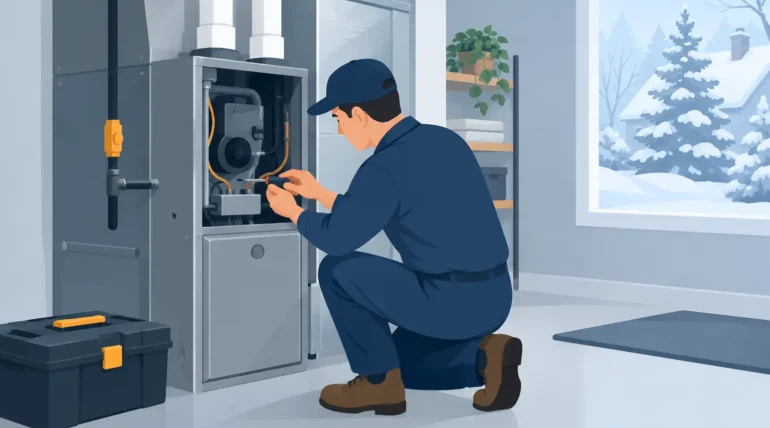
A professional visit is the part of winter preparation that goes beyond what you can see from the outside. During a heating tune-up, a technician can inspect key operating and safety components, verify airflow and temperature performance, check electrical connections, and look for signs of wear.
TOP AC offers a heating tune-up for $95, regularly $150. If your system is not heating correctly, diagnostics start from $125. These are stated service prices, while any repair recommendation depends on the equipment, the failed part, and the work required.
Family-owned since 2011, TOP AC is licensed and insured under CSLB #959168. A planned appointment can be especially useful for homes with an older furnace, inconsistent room temperatures, rising utility bills, or a system that has needed repeated attention in past seasons.
A Practical Winter Readiness Checklist
Use this quick check before regular heating begins:
| Task | What to check | When to call for help |
|---|---|---|
| Air filter | Clean, correctly installed, and the right size | Filter gets dirty unusually fast or airflow is weak |
| Thermostat | Set to Heat, batteries fresh, schedule correct | No response, short cycling, or inaccurate temperatures |
| Registers | Open and free of furniture or debris | Major temperature differences between rooms |
| Furnace area | Clear, dry, and free of stored chemicals or boxes | Water around equipment, corrosion, or visible damage |
| First heating cycle | Warm air arrives and normal sounds fade quickly | Gas odor, persistent burning smell, loud noises, or no heat |
| Safety alarms | Carbon monoxide and smoke alarms test properly | An alarm sounds or has reached its replacement date |
When a Tune-Up Is Not Enough
Maintenance is designed to reduce surprises, but it cannot guarantee that an aging part will never fail. Schedule an evaluation rather than waiting if your furnace blows cool air, starts and stops repeatedly, makes new noises, leaves some rooms cold, or needs frequent thermostat changes to keep the home comfortable.
Age matters, but it is not the only decision point. A newer furnace with one repairable issue may be worth fixing. An older unit with recurring repairs, poor comfort, or declining efficiency may warrant a conversation about replacement options. A licensed technician should explain the findings clearly so you can weigh repair and replacement without pressure.
For homeowners planning ahead, TOP CLUB maintenance plans start at $15 per month. A membership can make routine seasonal care easier to stay on top of, particularly for households that rely on dependable heating on cold Valley nights and cooling during summer heat waves.
FAQs
Should I turn my furnace on before winter?
Yes. Test it before you need it every day, ideally during a mild evening when you have time to notice how it starts and runs. A light dusty smell may occur at first, but it should disappear quickly.
How often should a furnace be serviced?
Most homeowners benefit from professional heating maintenance once a year, preferably before regular winter use. Annual service helps identify wear, safety concerns, and airflow issues that a visual homeowner check may miss.
Why does my furnace smell dusty when I first turn it on?
Dust can settle on heating components during the long off-season and burn off when the system first operates. If the odor persists, becomes electrical or chemical in nature, or is paired with smoke or unusual noises, turn the system off and schedule service.
Can a dirty filter make my furnace stop working?
It can contribute to overheating, weak airflow, longer run times, and safety shutoffs. Replacing a dirty filter is one of the simplest ways to support proper operation, but repeated shutdowns still need professional diagnosis.
What temperature should I set my thermostat in winter?
The right setting depends on household comfort, insulation, and daily schedules. Choose a steady, comfortable temperature when people are home, then use a modest setback when sleeping or away if it works for your household. Large, frequent changes can make comfort harder to manage in homes with uneven heating.
Need Help Preparing Your Furnace for Winter?
Need help with furnace winter preparation? Call TOP AC at (855) 999-8672 or request a Free Estimate. If routine maintenance is the right fit, ask about TOP CLUB for an easier way to keep seasonal care on schedule.