
November 13, 2026
Furnace Pilot Problems and Why Flames Go Out
A furnace can sound as if it is starting normally, then leave the house cold because one small flame will not stay lit. For homes with older gas furnaces, furnace pilot problems are often the reason. The pilot flame is a safety-critical part of the system, so a repeated outage is not something to ignore or keep resetting.
The good news is that many pilot failures have recognizable causes. A professional diagnosis can usually separate a simple cleaning or adjustment from a worn safety component or a larger furnace issue. That means you get a clear answer before approving a repair.
First, confirm that your furnace has a pilot light
Not every furnace uses a standing pilot. Many newer gas furnaces use electronic ignition, which creates a flame only when the thermostat calls for heat. If you do not see a small flame burning continuously in the burner area, your unit may have an igniter or flame sensor problem rather than a pilot issue.
Your furnace manual or the data label inside the access panel can help identify the ignition type. If you are unsure, a licensed HVAC technician can identify it quickly and inspect the correct components. Treating an electronic ignition furnace like a standing-pilot system can lead to confusion and unnecessary downtime.
Common furnace pilot problems
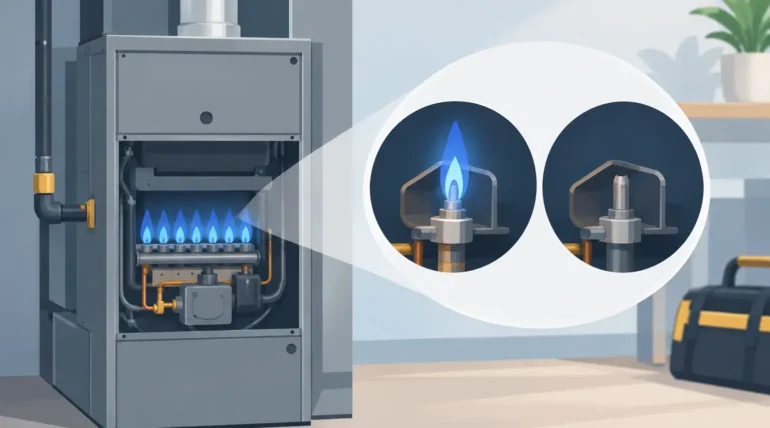
A healthy pilot flame is usually steady and mostly blue, with a small yellow tip possible in some models. It should reach the sensor that proves the flame is present. A weak, flickering, yellow, or frequently extinguished flame points to a condition that needs attention.
A dirty pilot opening
Dust, lint, and debris can partially block the small opening that supplies gas to the pilot. This is especially common when a furnace has been off through a long warm season. The flame may look small, uneven, or yellow instead of clean and stable.
The pilot assembly is delicate, and trying to poke debris out with a pin or wire can damage the opening or change how the flame burns. A technician can clean the assembly correctly while checking for related burner and airflow issues.
A failing thermocouple or flame-sensing device
On many standing-pilot furnaces, the thermocouple sits in the pilot flame and confirms that the flame is burning. If it does not sense enough heat, it closes the gas valve as a safety measure. That is why a pilot may light while the control is held down, then go out as soon as the control is released.
A worn thermocouple is a common repair, but the part is not always the only cause. Poor flame contact, loose connections, corrosion, or a weak pilot flame can create the same symptom. Proper testing matters because replacing parts by guesswork can leave the original issue unresolved.
Drafts and combustion-air concerns
The pilot needs a stable environment. A strong draft near the furnace, a damaged vent connection, or restricted combustion air can disturb the flame. You may notice that the pilot goes out during windy weather, after an attic fan runs, or when a nearby door opens and closes.
This is one reason a pilot that repeatedly goes out deserves a full inspection. The problem may not be at the pilot itself. Venting and combustion issues affect both reliable heat and safe operation.
Gas supply or gas valve trouble
If the pilot will not light at all, the furnace may not be receiving enough gas, or the gas control may not be opening correctly. Other gas appliances in the home can provide a clue, but they do not confirm that the furnace is operating safely. Furnace controls and gas valves need licensed service, not trial-and-error adjustments.
A technician can check the furnace safely, identify whether the issue is within the appliance, and explain the recommended repair in plain language.
A dirty or neglected furnace
Heating equipment collects dust even in homes that appear very clean. Clogged filters, dirty burners, and years without maintenance can contribute to unreliable starts and uneven performance. The pilot may be the visible symptom while the furnace needs broader cleaning, adjustment, and safety testing.
For homeowners in Woodland Hills, Tarzana, and nearby Valley communities, the first cold stretch often exposes this kind of delayed maintenance issue. A furnace that worked at the end of last winter may still struggle when it is asked to run again months later.
What you can safely check before calling
Start with the thermostat. Set it to Heat, make sure the temperature setting is above the current room temperature, and confirm the furnace switch is on. Then check that the furnace filter is not heavily clogged. A restricted filter does not usually extinguish a pilot directly, but it can cause heating problems that look like a furnace failure.
You can also look through the furnace viewing window, if your model has one, without removing panels or touching gas controls. Note whether the pilot is absent, weak, yellow, or unable to remain lit. Those details help speed up diagnosis.
Do not disassemble the burner area, adjust a gas valve, or repeatedly attempt to relight a pilot that will not stay on. Follow only the lighting instructions printed on your specific furnace or in its owner manual. If those instructions are missing, unclear, or do not work, stop and schedule service.
When a pilot problem is an urgent safety issue
Turn the furnace off and leave the area if you smell gas. Do not operate switches, use a lighter or match, start a vehicle nearby, or attempt to find the source of the leak. Once you are safely away from the area, contact the gas utility or emergency services as appropriate, then arrange qualified furnace service.
You should also stop using the furnace if you notice soot around the unit, unusual rumbling or booming at startup, headaches or nausea that occur when the heat runs, or a carbon monoxide alarm. These signs do not automatically mean the pilot is at fault, but they do call for prompt professional attention.
A carbon monoxide detector is a valuable layer of protection, but it does not replace furnace maintenance. It alerts you to a potential danger. A heating inspection helps prevent combustion problems before they become an emergency.
Why the pilot keeps going out after relighting
One successful relight does not necessarily mean the problem is fixed. A pilot that fails again within hours or days may have a weak thermocouple, unstable gas flow, venting issue, or debris affecting the flame. The furnace may seem fine until the next time the thermostat calls for heat, usually when you need it most.
There is a trade-off between waiting to see if the issue repeats and getting it checked promptly. If the pilot went out once after an unusual outage or long period of nonuse, monitoring it may be reasonable after following the manufacturer’s instructions. If it goes out repeatedly, will not stay lit, or produces an abnormal flame, service is the safer and more cost-effective choice.
Professional heating repair protects more than comfort
A complete service visit should look beyond simply getting a flame going again. The technician should inspect the pilot assembly or ignition system, safety controls, burners, venting, filter condition, and overall furnace operation. After repairs, the system should be tested through a heating cycle so you know it starts and runs properly.
TOP AC provides licensed heating repair for homeowners and property owners in Canoga Park, West Hills, Northridge, Encino, and surrounding communities. You should receive an honest diagnosis, clear options, and clean workmanship, whether the repair is minor or the furnace needs more involved attention. Same-day service and 24/7 summer emergency support are available when a heating problem cannot wait.
If your pilot flame is weak, yellow, or repeatedly going out, do not settle for temporary heat. Schedule an inspection at (855) 999-8672 and give your home a safer, more dependable path back to warmth.