
November 22, 2026
How to Reduce HVAC Downtime Before It Starts
To reduce HVAC downtime, address small performance changes before they become a no-cooling or no-heat call, and keep the system maintained on a schedule that matches how hard it works. For homeowners and property owners, the best protection is a combination of clean airflow, professional tune-ups, prompt repairs, and a realistic replacement plan for aging equipment.
In Canoga Park and across the San Fernando Valley, an air conditioner may run for long stretches during summer heat waves. That workload exposes weak capacitors, dirty coils, worn electrical parts, and drainage problems quickly. A little planning will not prevent every failure, but it can greatly reduce the chance that a minor issue turns into a day without comfort.
Why HVAC downtime is more disruptive than one bad day
HVAC downtime is not just an inconvenience. When an AC system stops during hot weather, indoor temperatures can climb fast, especially in homes with older insulation, west-facing rooms, or multiple people at home during the day. For families with young children, older adults, pets, or health concerns, restoring cooling becomes urgent.
For offices, retail spaces, and multi-unit properties, downtime can mean uncomfortable tenants, distracted employees, lost business, and damage to temperature-sensitive equipment or inventory. The cost of a breakdown is often more than the repair itself because it also interrupts normal operations.
The goal is not to replace every part at the first sign of wear. It is to spot patterns early, make sensible repairs, and avoid forcing a struggling system through another peak season without a plan.
Start with maintenance before the heavy-use season
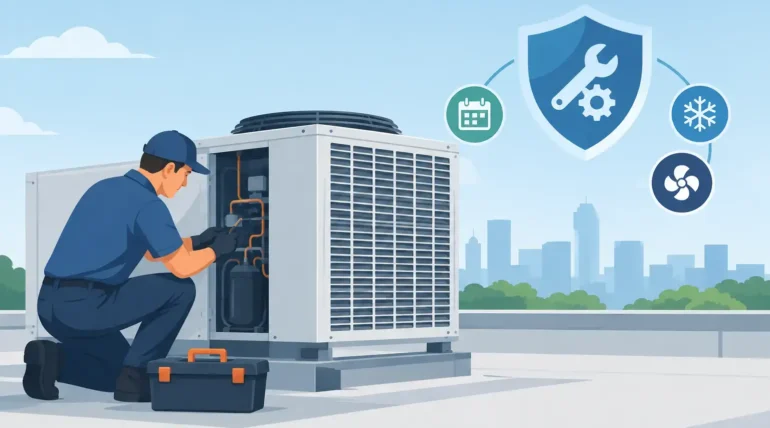
A professional tune-up gives a technician the opportunity to find problems while the equipment is still running. During AC maintenance and tune-ups, technicians can check electrical connections, operating performance, safety controls, condensate drainage, refrigerant-related symptoms, filters, and visible wear on key components.
For cooling equipment, schedule service before sustained hot weather arrives whenever possible. For heating, schedule service before cold nights become frequent. This timing matters because repair parts and appointment availability can be more limited when every homeowner is calling during the same heat wave or cold snap.
TOP AC offers a heating tune-up for $95, regularly $150. Residential customers who prefer an ongoing maintenance schedule can consider TOP CLUB residential HVAC maintenance plans, available from $15 per month.
Use a simple seasonal homeowner check
Between professional visits, homeowners can reduce strain by keeping return vents clear, replacing filters on the schedule appropriate for the home, and making sure the outdoor unit is not blocked by leaves, stored items, or dense growth. Do not open electrical panels or attempt refrigerant work yourself. Those tasks require a licensed HVAC technician.
Pay attention to whether some rooms are suddenly much warmer or cooler than others. Uneven comfort can come from airflow restrictions, thermostat concerns, insulation issues, equipment performance changes, or several factors at once. Early evaluation is more useful than waiting for the system to stop completely.
Act on warning signs, not just breakdowns
Most equipment failures provide some warning. The signs may be subtle at first, but they are worth reporting when they persist.
| Warning sign | What it may mean | Best next step | |—|—|—| | AC runs longer but the home feels warmer | Dirty components, airflow restrictions, or declining system performance | Schedule a diagnostic visit before peak heat | | Repeated thermostat adjustments | The system may not be keeping up consistently | Check the filter, then have performance evaluated | | Water near indoor equipment | A drainage issue may be developing | Turn off the system if leakage is significant and call for service | | New buzzing, rattling, or grinding | A loose or worn component may be getting worse | Arrange professional inspection promptly | | Breaker trips or system cycles on and off | An electrical or safety issue may be involved | Stop resetting repeatedly and call a technician |
A system that starts, stops, and restarts frequently should not be ignored. Short cycling can put additional wear on components and may leave the home uncomfortable even though the equipment appears to be running.
When a repair is needed, timely AC repair service can often prevent additional damage. TOP AC is family-owned, licensed and insured under CSLB #959168, and has served local homeowners since 2011. Diagnostics start from $125, with clear recommendations based on the condition of the equipment rather than pressure to replace a system that still has a reasonable path forward.
Keep airflow and indoor conditions under control
Airflow problems are a common source of reduced performance and unnecessary runtime. A loaded filter, closed-off return grille, blocked supply register, or crowded outdoor unit can make the system work harder to deliver the same comfort.
Filter timing depends on the filter type, household size, pets, indoor air concerns, and how often the system runs. Check it monthly during heavy cooling or heating use. Replace it when it is visibly loaded or according to the manufacturer guidance. A filter that is too restrictive for the equipment can also create problems, so more expensive is not always better.
Wildfire smoke and Santa Ana wind events can also change the indoor air picture in Southern California. During smoky periods, homeowners may need to check filters more often and discuss air-quality options with a professional. Cleaner indoor air supports comfort, but it should not be confused with a cure for a mechanical problem. If the AC is noisy, leaking, or failing to cool, it needs service.
Make repair-or-replace decisions before the emergency
Every system reaches a point where repeated repairs deserve a larger conversation. The right answer depends on the equipment’s age, repair history, installation condition, energy use, available parts, and how reliably it has kept the home comfortable. A single repair does not automatically mean replacement is necessary.
On the other hand, waiting until a complete failure can limit your choices. If an older system has recurring trouble near the start of summer, ask for an evaluation while you still have time to compare options, consider efficiency needs, and schedule work around your household.
New-system estimates should be specific to the home and equipment needs, so generic online price ranges can be misleading. TOP AC provides a Free Estimate on new systems and offers financing through Wells Fargo for qualified customers. For qualifying Mitsubishi Electric systems, TOP AC is a Mitsubishi Electric Diamond Dealer and those systems may carry up to a 12-year manufacturer warranty. Separately, TOP AC provides its own 10-year labor warranty on every system it installs.
Plan for property-specific risks
No two homes or buildings place the same demands on HVAC equipment. A shaded home may have different cooling needs than a home with strong afternoon sun. Older properties may have insulation gaps that make an otherwise functional system seem undersized. Commercial properties may have occupancy swings, equipment heat loads, or operating hours that require more frequent oversight.
For business owners and property managers, planned maintenance is especially valuable because it creates a record of system condition and helps budget for upcoming repairs. Commercial HVAC service can help owners make decisions around comfort, reliability, and operational impact instead of reacting after a tenant or customer complaint.
If the issue is connected to hot upstairs rooms, fast temperature loss, or persistent discomfort, attic or crawl space insulation may also deserve attention. Insulation helps reduce the load placed on heating and cooling equipment, which can improve comfort and reduce excessive runtime. It is one part of the larger comfort picture, not a substitute for repairing a failing system.
What to do when the system stops working
First, check the thermostat setting, verify the breaker has not tripped, and look at the filter. If the filter is heavily loaded, replace it with the correct type and give the system time to respond. If there is water leakage, unusual electrical behavior, burning smells, or repeated breaker trips, turn the system off and contact a licensed professional.
Avoid repeatedly cycling the equipment on and off in hopes that it will recover. This can add stress to already failing components. Take note of when the issue started, what the system was doing, and whether you heard or saw anything unusual. That information helps the technician diagnose the problem efficiently.
TOP AC provides AC emergency response 24/7 from June through September. Heating calls are handled during regular business hours, Monday through Saturday, 8 AM to 6 PM.
FAQs
How often should I schedule HVAC maintenance to reduce downtime?
Most homes benefit from professional maintenance before the main cooling season and before the heating season. A system with heavy use, pets, indoor air concerns, or a history of repairs may need closer attention. A technician can recommend a sensible schedule based on the actual equipment condition.
Can a dirty filter really cause an HVAC system to fail?
A dirty filter may not cause every failure, but it can restrict airflow and make equipment work harder than it should. That extra strain can contribute to poor cooling, overheating, reduced comfort, and avoidable wear. Checking filters regularly is one of the simplest steps homeowners can take.
Is it better to repair an older AC or replace it?
It depends on the repair needed, the system’s reliability, energy performance, and whether parts remain available. If repairs are isolated and the system is otherwise dependable, repair may be reasonable. If problems are recurring or the equipment cannot maintain comfort, a Free Estimate for replacement options can help you decide without rushing.
What is the best time to address AC problems in the Valley?
The best time is when you first notice a change in performance, ideally before high summer demand. Waiting until a major heat wave can turn a manageable repair into a comfort emergency. Early service also gives you more time to weigh repair and replacement options.
Do maintenance plans help commercial properties avoid HVAC downtime?
Yes, planned visits can identify developing issues, support budgeting, and reduce the chance of an unexpected interruption during busy hours. They cannot guarantee that no part will ever fail, but they make it easier to manage risk and respond before a small concern becomes a larger operational problem.
Keep comfort from becoming an emergency
A dependable HVAC system is built on attention before the hottest or coldest day arrives. Watch for changes, keep airflow clear, and schedule service when the equipment starts showing signs that it needs help.
Need help with reduce HVAC downtime? Call TOP AC at (855) 999-8672 or request a Free Estimate at top-ac.com/contact/.