

November 20, 2026
How to Insulate Crawl Space the Right Way
A crawl space should be insulated only after moisture, pests, and air leaks are addressed. Learning how to insulate crawl space areas the right way can make floors feel less drafty, reduce strain on HVAC equipment, and help your home hold comfortable temperatures through Valley heat and cold winter nights.
For many homes in Canoga Park, Woodland Hills, and nearby San Fernando Valley communities, the crawl space is out of sight until a comfort problem starts upstairs. If your floors feel unusually cold, rooms heat up quickly in summer, or your system seems to run longer than it should, the space below the home may be part of the issue.
Start With the Crawl Space Condition, Not the Insulation
Insulation is not a cure for standing water, active leaks, rodent damage, or deteriorating wood. Covering those problems can trap moisture and make them harder to spot later. Before choosing materials, inspect the area carefully or have a qualified professional assess it.
Look for damp soil, water stains, mold-like growth, damaged insulation, disconnected or sagging HVAC lines, pest activity, and gaps around pipes or wiring. Pay attention to the foundation walls and the rim joist, which is the band of framing around the edge of the floor structure. These areas often allow outside air into the home.
In Southern California, crawl spaces can still develop moisture issues even without frequent rain. A plumbing leak, poor drainage near the foundation, or humid outdoor air entering the space can create problems over time. Homes exposed to Santa Ana winds can also experience significant air movement through unsealed gaps, which can bring dust and outdoor pollutants into the building envelope.
If you find active moisture or structural concerns, resolve those first. Insulation performs best in a dry, clean, stable crawl space.
Choose Between Floor Insulation and Crawl Space Encapsulation
There are two common approaches to crawl space insulation. The right choice depends on how the space is built, whether it is damp, and whether HVAC equipment or ducts run below the house.
Insulating the floor above the crawl space
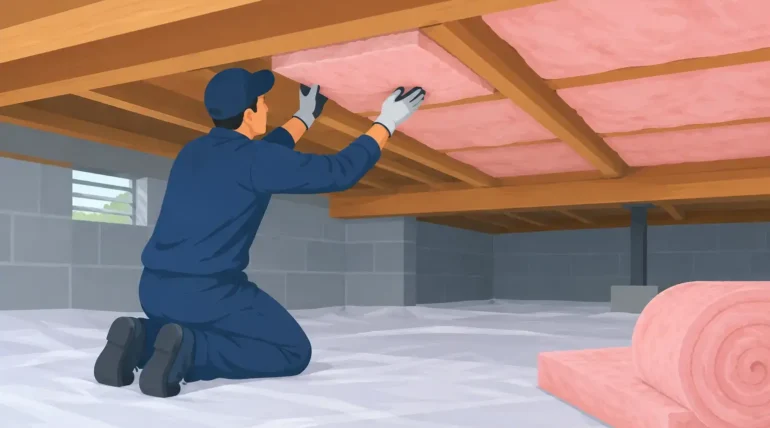
This approach places insulation between the floor joists. It can be a practical option for a dry crawl space where the goal is to reduce heat transfer between the home and the area below it.
Fiberglass batts are common because they are widely available and cost-effective. They must be installed snugly against the underside of the subfloor, without gaps, compression, or sagging. Loose, fallen, or wet fiberglass does little to improve comfort.
Mineral wool batts are another option. They can resist moisture better than standard fiberglass and fit firmly between joists, though material costs are often higher. Rigid foam may be used in targeted areas, particularly around rim joists, when properly installed and protected as required.
Insulating the crawl space walls
Wall insulation is typically part of a conditioned or encapsulated crawl space strategy. Instead of separating the home from the crawl space, this method brings the crawl space closer to the home’s thermal boundary.
A ground vapor barrier is installed over the soil, seams are sealed, and foundation walls are insulated with an appropriate material. This can help control moisture and reduce outside air movement. It is usually a more involved project than insulating floor joists, but it may be worth considering in crawl spaces with HVAC components or recurring humidity concerns.
Do not assume one method is always better. A dry, uncomplicated crawl space may only need well-installed floor insulation and air sealing. A crawl space with moisture history, exposed HVAC equipment, or substantial air leakage may benefit from a more comprehensive approach.
How to Insulate Crawl Space Areas Step by Step
The best installation sequence prevents common failures, such as insulating over wet materials or leaving major gaps around the perimeter.
- Inspect and clean the space. Remove fallen or damaged insulation, debris, and signs of pest nesting. Identify leaks, drainage problems, or wood damage before adding new materials.
- Correct moisture sources. Repair plumbing leaks and address water entry around the foundation. If the soil is exposed, a properly installed vapor barrier may be appropriate.
- Air-seal accessible gaps. Seal openings around plumbing penetrations, wiring, and the rim joist with materials suited for the application. Air sealing should happen before insulation.
- Install the selected insulation system. Floor batts should fit securely against the subfloor. Wall insulation should be continuous where an encapsulation approach is selected.
- Protect HVAC components. Keep insulation from blocking access to equipment, shutoff valves, electrical junctions, or service areas. Insulation should not interfere with safe operation or future maintenance.
- Check the work after installation. Look for gaps, compression, hanging material, unsealed vapor-barrier seams, and areas where pests could enter.
This is a job where details matter. Insulation with gaps can leave the same cold spots and air leaks you were trying to solve.
Which Insulation Material Makes Sense?
| Material | Best Use | Benefits | Trade-Offs | |—|—|—|—| | Fiberglass batts | Dry floor joist cavities | Affordable and familiar | Loses performance if wet, compressed, or sagging | | Mineral wool batts | Floor cavities needing a firmer fit | Moisture-resistant and durable | Usually costs more than fiberglass | | Rigid foam board | Foundation walls and rim joists | Strong air-sealing potential | Requires careful detailing and code-compliant protection | | Closed-cell spray foam | Difficult gaps and selected surfaces | Insulates and air-seals in one application | Higher cost and best handled by trained installers |
California building requirements, fire-safety rules, and site conditions can affect which material is suitable. A professional should confirm the approach before work begins, especially when insulating foundation walls or modifying an enclosed crawl space.
What Does Crawl Space Insulation Cost?
Crawl space insulation costs vary based on square footage, access, moisture cleanup, material choice, and whether old insulation must be removed. The following are general estimates, not TOP AC pricing or quotes.
Basic floor-joist insulation in a dry, accessible crawl space may range from roughly $1.50 to $4 per square foot for materials and installation. Projects involving removal of damaged insulation, vapor-barrier work, air sealing, or wall insulation can range from $3 to $10 or more per square foot. Encapsulation-style work can cost more because preparation and moisture control are a significant part of the job.
The lowest bid is not always the best value if it skips air sealing, leaves old wet insulation behind, or fails to identify a water source. Ask what preparation is included, what material will be used, and how the installer will protect access to HVAC equipment.
Crawl Space Insulation and HVAC Comfort
Your crawl space affects more than the temperature of the floor. When conditioned air escapes through gaps below the home, your air conditioner or heater has to run longer to keep up.
That extra runtime can make existing comfort problems more noticeable, especially during a San Fernando Valley heat wave. It may also reveal other issues, such as a system that needs service, a dirty filter, or equipment that is no longer operating efficiently. Regular AC maintenance and tune-ups can help identify performance concerns before the hottest part of the season.
If you notice uneven temperatures along with poor indoor air quality, insulation may be only one part of the solution. TOP AC can also assess comfort concerns through indoor air quality services and help homeowners understand whether filtration, insulation, or HVAC service is the most sensible next step.
For homes with aging or damaged crawl space insulation, attic and crawl space insulation services provide a practical way to improve the building envelope without guessing at materials or installation details.
Common Crawl Space Insulation Mistakes
The biggest mistake is installing insulation before solving a moisture problem. Wet insulation can become heavy, sag, lose effectiveness, and contribute to poor indoor conditions.
Another frequent issue is putting batts in place without air sealing the rim joist or penetrations. Insulation slows heat transfer, but it does not reliably stop moving air. Small gaps can still carry hot outdoor air, dust, and odors into the home.
Homeowners should also avoid blocking access to HVAC equipment. If your system, refrigerant lines, or other components are located in the crawl space, they still need safe room for inspection and service. When cooling performance is already a concern, schedule AC repair rather than assuming insulation alone will fix it.
When to Call a Professional
A qualified contractor is especially helpful when the crawl space has standing water, visible microbial growth, rodent contamination, damaged framing, limited access, or HVAC equipment below the home. These conditions need a clear plan, not a quick cover-up.
TOP AC is a family-owned, licensed and insured contractor serving homeowners from Canoga Park to Simi Valley and Camarillo. Since 2011, our team has helped local households improve comfort with clear recommendations and clean, dependable work.
FAQs
Should I insulate the crawl space ceiling or the walls?
It depends on the crawl space condition and whether you are keeping it outside the home’s thermal boundary or treating it as a more controlled area. Dry, vented spaces often use floor insulation, while encapsulation-style projects typically insulate foundation walls.
What R-value should crawl space insulation have?
The appropriate R-value depends on the location, assembly, insulation type, and current code requirements. A contractor can evaluate the floor system or foundation wall and recommend a material that fits the space without creating moisture or access problems.
Can I install crawl space insulation myself?
A simple, dry, accessible space may be manageable for an experienced homeowner, but moisture control and air sealing are easy to get wrong. Professional help is wise when there are pests, water, mold-like growth, damaged insulation, or HVAC components in the area.
Will crawl space insulation lower my energy bills?
It can reduce heat gain and heat loss, particularly if the existing insulation is missing, wet, or poorly installed. Savings depend on the home’s overall condition, including attic insulation, windows, air leaks, and HVAC performance.
How often should crawl space insulation be checked?
Check it at least once a year and after a plumbing leak, pest issue, or unusual moisture event. If your heating or cooling system has been running harder than usual, it is also a good time to inspect the space below the home.
Need Help With Crawl Space Insulation?
Need help with crawl space insulation? Call TOP AC at (855) 999-8672 or request a Free Estimate at top-ac.com/contact/. If you want ongoing support for the HVAC system that keeps your home comfortable, ask about TOP CLUB maintenance plans from $15 per month. A dry, properly insulated crawl space is not just hidden work beneath the house – it is a practical foundation for cleaner, steadier comfort upstairs.