
November 19, 2026
Seasonal HVAC Inspection Checklist Guide
A seasonal HVAC inspection helps catch small comfort and safety issues before a Valley heat wave or a cold evening turns them into an urgent call. This seasonal HVAC inspection checklist guide shows what homeowners can check safely, what a licensed technician should handle, and when it makes sense to schedule service.
In Canoga Park, air conditioning systems may work hard for months at a time. Dust, extreme summer temperatures, wildfire smoke, and long cooling cycles can all put extra strain on filters, electrical parts, and outdoor equipment. A little planning before the season changes can protect comfort, indoor air quality, and your budget.
Why seasonal HVAC inspections are worth scheduling
Your HVAC system does not usually fail without warning. A room that takes longer to cool, a new rattle at startup, higher utility bills, weak airflow, or a thermostat that seems inaccurate can all point to an issue worth addressing early.
Seasonal maintenance is not a promise that no component will ever wear out. It is a practical way to find developing problems while there is time to make a clear decision, rather than dealing with a breakdown on the hottest afternoon of the year. It also gives a technician a chance to confirm the system is operating safely and efficiently for the season ahead.
For many homes, two checkups a year make sense: one before consistent cooling weather and another before regular heating use. The timing can vary. A newer system with light use may need fewer corrections than an older unit serving a large household, a home with pets, or a property exposed to frequent dust and smoke.
Spring and summer cooling checklist
Complete the homeowner steps first, then arrange professional maintenance if it has been a year since the last service, performance has changed, or you are heading into heavy AC use.
| Check | What to look for | What to do | | — | — | — | | Thermostat | Correct time, mode, and temperature setting | Set it to cool and confirm the system starts normally | | Air filter | Visible dust, discoloration, or restricted airflow | Replace it with the correct size and type | | Supply vents | Furniture, rugs, or closed registers blocking air | Clear obstructions and keep airflow balanced | | Outdoor unit | Leaves, branches, or stored items nearby | Keep the area clear and avoid covering the unit while running | | Condensate area | Water around the indoor equipment or drain line | Call for service if you see recurring water or moisture | | System operation | Grinding, buzzing, warm supply air, short cycling | Turn the system off if there is a burning smell or serious noise and schedule service |
Start with the filter and airflow
A dirty filter is one of the most common causes of reduced airflow and unnecessary strain. Check it monthly during peak cooling season, especially if you have pets, allergies, construction dust nearby, or a household that keeps windows open often. Follow the filter size and airflow guidance for your equipment. A very dense filter can improve particle capture, but it may not be appropriate for every system.
Typical homeowner estimates: standard replacement filters often cost about $15 to $60, depending on size and filtration level. The right choice depends on your system and indoor air goals, not simply the highest rating on the shelf.
Walk through the home while the AC is running. Note rooms that feel much warmer than others, vents with weak airflow, or moisture near indoor equipment. These details help a technician diagnose the issue more efficiently if you need AC repair service.
Look at the outdoor unit without opening it
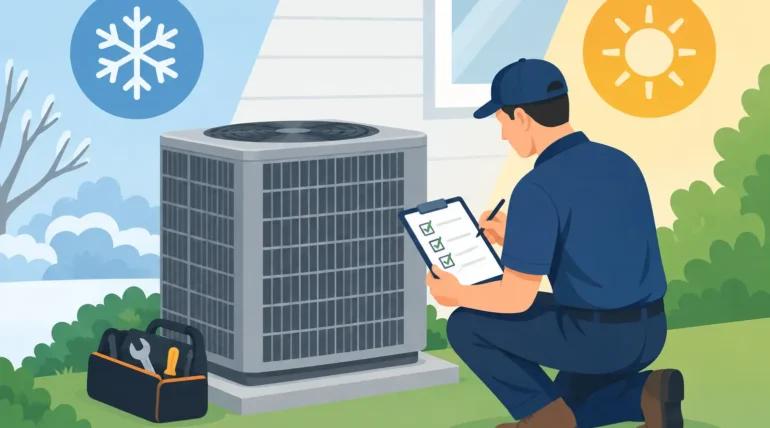
Keep shrubs, leaves, storage bins, and other items away from the outdoor unit. The equipment needs breathing room to release heat. Do not spray electrical components, remove access panels, or try to straighten damaged coil fins yourself.
If you hear loud metal-on-metal sounds, repeated clicking, or the unit runs but the home does not cool, shut the system down and call a licensed professional. Continuing to run a struggling unit can turn a smaller repair into a larger one.
A technician performing a cooling tune-up can inspect electrical connections, motors, capacitors, refrigerant-related performance, drainage, controls, and overall operation. See what is included in AC maintenance and tune-up service.
Fall and winter heating checklist
Cold nights in the San Fernando Valley can arrive quickly after warm afternoons. Before the first sustained heating stretch, test the system on a mild day rather than waiting for the first chilly night.
Set the thermostat to heat and raise the temperature a few degrees above the room temperature. The system should start and deliver warm air within a reasonable time. A slight dust smell can occur during the first heating cycle of the season, but a persistent burning odor, gas odor, soot, or a carbon monoxide alarm requires immediate attention. Leave the area and follow appropriate safety guidance if you suspect a gas-related hazard.
Check that return grilles and supply vents are open and unobstructed. Replace the filter if needed, and make sure carbon monoxide alarms are working where applicable. Never store paint, cleaners, boxes, or other combustible materials next to heating equipment.
What a professional heating inspection covers
Heating equipment has safety-related parts that homeowners should not test or adjust themselves. A licensed technician can inspect combustion-related operation where applicable, electrical components, safety controls, ignition, blower performance, venting connections associated with the equipment, and thermostat response.
TOP AC offers a heating tune-up for $95, regularly $150. If the system is noisy, cycles on and off repeatedly, leaves rooms cold, or does not start, schedule heater repair rather than repeatedly resetting it. Heating calls are handled during regular business hours, Monday through Saturday, 8 AM to 6 PM.
Seasonal HVAC inspection checklist guide for indoor air
Comfort is not only about temperature. When wildfire smoke or dusty conditions affect the area, families often keep windows closed longer. That can make filter condition and indoor air habits more noticeable.
Start with the basics: use the correct filter, replace it on schedule, and keep return grilles clear. If your home has persistent dust, allergy concerns, odors, or uneven comfort, an evaluation can help identify realistic options. TOP AC provides indoor air quality services including filtration, purification, and duct cleaning as part of air quality work.
Insulation also affects how long your system needs to run. In older homes, heat entering through the attic can make upstairs rooms difficult to cool, while heat loss can be more noticeable during winter. Attic and crawl space insulation services may be worth discussing when comfort problems persist even after the HVAC system is operating properly.
When an inspection should become a service call
Do not wait for the next seasonal visit if you notice water leaks, ice on equipment, an electrical burning smell, a tripped breaker, a carbon monoxide alarm, loud new noises, or no heating or cooling. These symptoms need timely evaluation, and some require shutting the system off until a technician can inspect it.
TOP AC is family-owned, licensed and insured, and has served local homeowners since 2011. Diagnostics start from $125, and technicians can explain what they found, what is urgent, and what can reasonably be planned for later. If replacement becomes the better long-term choice, request a Free Estimate for a new system rather than guessing based on age alone.
For homeowners who prefer routine scheduling, TOP CLUB residential plans start at $15 per month. Membership can be a good fit for busy households, older systems, and anyone who wants maintenance handled before peak weather arrives.
FAQs
How often should I schedule an HVAC inspection?
Most homes benefit from professional maintenance twice a year: once before cooling season and once before heating season. If your system is newer and lightly used, your technician may recommend a different schedule based on its condition, manufacturer guidance, and household needs.
Can I inspect my HVAC system myself?
You can safely check filters, thermostat settings, visible airflow, clear space around the outdoor unit, and signs of leaks or unusual noise. Leave electrical panels, refrigerant components, gas connections, and internal repairs to a licensed HVAC technician.
Why is my AC running but not cooling well?
A clogged filter, thermostat issue, dirty outdoor equipment, airflow restriction, electrical part problem, or refrigerant-related issue may be involved. Because several causes can create the same symptom, a professional diagnostic is the clearest way to avoid replacing parts unnecessarily.
Should I replace my filter more often during wildfire smoke?
Possibly. Check it more frequently when smoke, dust, pets, or extended AC use are present, and replace it when it is visibly loaded or airflow is reduced. The best replacement interval depends on the filter type and your specific system.
Is a tune-up the same as a repair?
No. A tune-up is preventive service that checks operation and helps identify developing concerns. A repair addresses a specific failure or performance problem found during testing or reported by the homeowner.
Need help with seasonal HVAC maintenance?
A seasonal check is most useful before discomfort becomes urgent, when you still have time to choose the right repair, maintenance plan, or system solution for your home. Need help with seasonal HVAC maintenance? Call TOP AC at (855) 999-8672 or request a Free Estimate at top-ac.com/contact/.