
November 17, 2026
Encino Furnace Safety Warning Signs
Encino furnace safety warning signs should never be brushed off as a normal part of an older heating system. If you smell gas, a carbon monoxide alarm sounds, see smoke, or feel unwell when the heat runs, turn the system off if it is safe to do so, leave the home, and get emergency help from outside.
Most furnace concerns are less immediate, but they still deserve prompt attention. A heater that cycles constantly, makes new noises, produces weak airflow, or leaves rooms cold can become a comfort, air-quality, or safety issue if it is ignored.
Warning Signs That Require Immediate Action
A furnace does not need to be visibly broken to create a serious hazard. Trust your senses, pay attention to alarms, and avoid trying to diagnose a combustion-related problem by taking panels off or relighting equipment yourself.
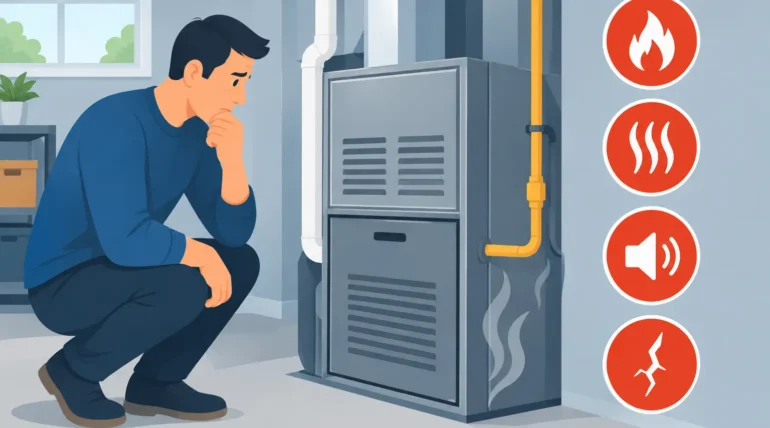
| Warning sign | What it could mean | What to do now | | — | — | — | | Gas or rotten-egg odor | Possible gas leak | Do not use switches, flames, or electronics nearby. Leave the area and contact the gas utility or emergency services from outside. | | Carbon monoxide alarm | Carbon monoxide may be present | Get everyone, including pets, outside immediately. Call 911 or the fire department from a safe location. | | Smoke, sparks, or burning odor that persists | Electrical fault, overheating, or fire risk | Shut off the furnace only if you can do so safely, leave if smoke is present, and call emergency services when needed. | | Headache, dizziness, nausea, or confusion while heat is running | Possible carbon monoxide exposure | Move outdoors immediately and seek emergency help. Do not re-enter until responders say it is safe. | | Yellow, wavering burner flame instead of a steady blue flame | Combustion problem | Turn the furnace off and arrange a professional inspection before using it again. |
A brief dusty smell when heat is first used after a long warm season can be normal. In Encino, where the long cooling season often leaves heating equipment untouched for months, dust on components may burn off during the first cycle. That smell should fade quickly. If it gets stronger, smells like melting plastic or electrical burning, or comes with smoke, treat it as a warning sign instead.
Furnace Safety Warning Signs That Need a Prompt Service Call
Not every issue calls for an evacuation, but waiting until the system quits can make a manageable repair more disruptive. A furnace that starts and stops every few minutes, known as short cycling, can be responding to overheating, a dirty filter, a thermostat issue, or a component problem. Repeated cycling also puts extra wear on the equipment.
Pay attention to changes in sound. A single click at startup may be normal, while loud banging, screeching, grinding, rattling, or booming is not something to ignore. Banging can point to expanding metal, loose parts, or delayed ignition. A technician should determine which is happening, especially if the sound is new or worsening.
Uneven heating is another practical warning. If one bedroom stays cold while the living area overheats, the cause may be as simple as a filter or thermostat setting, but it can also involve airflow restrictions, equipment performance, or insulation gaps. Older Valley homes can be especially prone to comfort differences between rooms, attics, and additions.
Other signs worth scheduling include a furnace that blows cool air, has trouble starting, runs far longer than usual, leaves unusually dry or stuffy indoor air, or causes a sudden unexplained increase in energy use. These do not automatically mean the system is unsafe, but they are good reasons to schedule professional heating maintenance and tune-up service.
Why These Problems Can Escalate
Gas furnaces produce heat through combustion, which is why proper venting, clean burners, functioning safety controls, and dependable airflow matter. A clogged air filter can restrict airflow and lead to overheating. A damaged flame sensor can cause startup failures. A cracked heat exchanger, venting issue, or burner problem requires professional evaluation because combustion gases must remain separated from the air your family breathes.
Santa Ana wind conditions can also bring dust and wildfire smoke into the San Fernando Valley. Keeping doors and windows closed during poor outdoor air conditions can help, but it also means indoor air concerns may be easier to notice. If your home feels stuffy or you are concerned about particles and filtration, an indoor air quality assessment can help identify practical options without treating symptoms as a furnace diagnosis.
For property owners, recurring heating complaints should be documented rather than handled as one-off annoyances. A pattern of no-heat calls, tripped safety switches, or tenant reports of odors deserves a thorough inspection. It protects occupants and helps avoid a larger interruption during a cold stretch.
What You Can Safely Check Before Calling
Homeowners can handle a few basic checks without opening the furnace cabinet or working near gas or electrical components. First, confirm the thermostat is set to Heat and set above the current room temperature. Next, check whether the furnace switch and circuit breaker are on, then look at the air filter.
If the filter is visibly loaded with dust, replace it with the correct size and type recommended for your system. Do not run a furnace without a filter, and do not force a filter that does not fit. Make sure supply registers and return grilles are not blocked by furniture, rugs, or storage.
You can also check carbon monoxide alarm batteries and test buttons according to the manufacturer’s instructions. Every home with fuel-burning equipment should have working carbon monoxide alarms, particularly near sleeping areas. A test confirms the alarm can sound, but it does not prove indoor air is free from carbon monoxide.
Avoid repeatedly resetting breakers, bypassing safety switches, relighting a pilot, or continuing to run a furnace that has triggered a carbon monoxide alarm. Those steps can hide the source of a problem instead of resolving it.
When Repair, Maintenance, or Replacement Makes Sense
The right next step depends on the symptom, the furnace’s condition, and whether the problem is isolated or recurring. A clean, well-maintained system with a worn ignition component may be a sensible repair. A furnace with repeat failures, poor performance, safety concerns, and rising operating costs may deserve a conversation about replacement options.
A diagnostic visit starts from $125. TOP AC’s heating tune-up is $95, regularly $150, and is designed to catch wear, airflow concerns, and operational issues before they become an inconvenient no-heat call. A tune-up is not a substitute for immediate service when there is a gas smell, carbon monoxide alarm, smoke, or visible damage.
When a new system is the practical choice, ask for a clear scope of work, permit guidance when applicable, efficiency information, warranty details, and a written estimate. TOP AC provides a Free Estimate for new systems and offers financing through Wells Fargo. The company’s 10-year labor warranty applies to every system it installs, while qualifying Mitsubishi Electric systems may carry up to a 12-year manufacturer warranty. These are separate protections with different terms.
Prevention Helps, but It Does Not Replace Attention
Annual professional service gives a technician the opportunity to inspect heating performance before you depend on it. Between appointments, keep the area around the furnace clear, replace filters on schedule, and take new odors or sounds seriously. A clean equipment area also makes it easier to spot water, rust, loose debris, or other changes that should be reported.
For homeowners who prefer a predictable maintenance schedule, TOP CLUB residential plans start at $15 per month. Membership can make seasonal care easier to stay on top of, especially for busy households that use the same system for both summer cooling and winter warmth.
FAQs
Is a burning smell from my furnace always dangerous?
No. A light dust smell during the first heating cycle of the season may fade after a short time. A persistent electrical, plastic, smoky, or sharp burning odor should be treated as a reason to turn the system off and arrange professional service.
What should I do if my carbon monoxide alarm goes off?
Leave the home immediately with everyone inside, including pets, and call 911 or the fire department from outdoors. Do not assume it is a false alarm, and do not re-enter or restart the furnace until emergency responders say it is safe.
Why is my furnace making a booming noise at startup?
A boom can occur when ignition is delayed and gas builds up before lighting. It may also have another mechanical cause, but it should be inspected promptly because combustion-related noises are not a DIY repair.
Can a dirty furnace filter create a safety issue?
A dirty filter can restrict airflow, contribute to overheating, and make the system work harder. It is not the only possible cause of a safety shutdown, but changing a clogged filter is a simple step that supports safe operation.
Should I turn my furnace off if it keeps short cycling?
If the furnace repeatedly starts and stops, switch it off and arrange service if changing the filter and checking the thermostat do not resolve it. Turn it off immediately if short cycling comes with burning odors, unusual noises, smoke, or a carbon monoxide alarm.
Need Help With Furnace Safety Warning Signs?
Need help with furnace safety warning signs? Call TOP AC at (855) 999-8672 or request a Free Estimate at top-ac.com/contact/. For routine upkeep, ask about TOP CLUB and give your heating system the attention it needs before a small concern becomes a cold-night problem.