

November 16, 2026
Ductless Mini Split Guide for Valley Homes
A ductless mini split can be an excellent way to cool a hot room, heat a converted space, or give different parts of your home more individual temperature control. This ductless mini split guide explains how these systems work, what they cost, where they make sense, and what to consider before installation.
For many homes in Canoga Park and across the San Fernando Valley, the appeal is straightforward: reliable cooling during long stretches of Valley heat without relying on one central system to solve every comfort problem. The right system can also provide efficient heat on chilly winter nights, but the best choice depends on the room, the home’s layout, insulation, and how your family uses the space.
What Is a Ductless Mini Split?
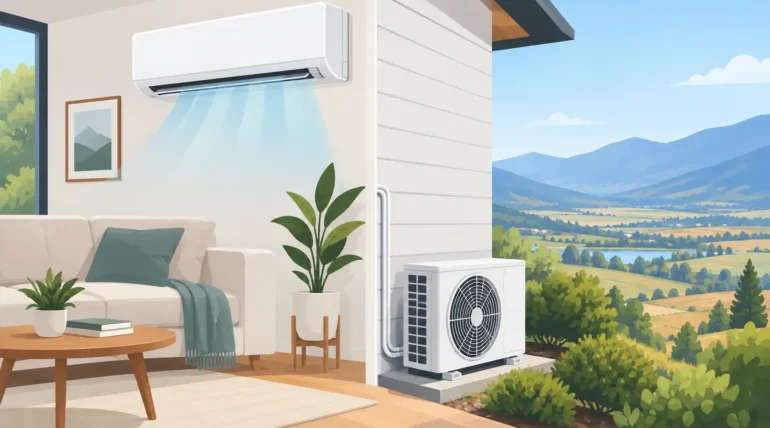
A ductless mini split is a heating and cooling system with two main parts: an outdoor unit and one or more indoor air handlers. Small refrigerant lines connect the equipment through an exterior wall, so the system does not need a network of air ducts to deliver conditioned air.
Each indoor unit serves a specific zone. You might install one in a primary bedroom that always runs warm, a garage conversion, a home office, or an addition where extending an existing system is impractical. Multi-zone systems connect several indoor units to one outdoor unit, allowing separate temperature settings in different rooms.
Most modern mini splits are heat pumps. That means they move heat rather than create it through combustion, providing air conditioning in summer and heating in cooler weather. They are not the right answer for every home, but they are especially useful when one or two rooms need focused comfort.
When a Mini Split Makes Sense
Ductless systems work best when there is a clear comfort problem in a defined area. If a room is far from the central thermostat, gets strong afternoon sun, or was added after the original home was built, it may not receive enough conditioned air from the main system.
Common situations include a converted garage, enclosed patio, guest suite, upstairs bedroom, home office, workshop, or a room above a garage. Older homes may also have layouts that make a full central-system update more involved than a targeted ductless solution.
In Woodland Hills and nearby Valley communities, west-facing rooms can become difficult to cool late in the day. A correctly selected mini split can address that specific problem without forcing the whole house to run colder than necessary.
A mini split may be less suitable when your central system is failing throughout the home, several rooms have poor airflow for the same underlying reason, or the building needs a complete comfort plan. In those cases, a professional assessment can help determine whether a new central system, insulation improvements, or another approach will deliver better long-term value.
The Main Benefits and Trade-Offs
The strongest benefit is zone control. Instead of cooling every room to the same temperature, you can adjust occupied spaces independently. That can improve comfort for households where one person prefers a cooler bedroom while another needs a warmer office.
Mini splits can also be very efficient because many systems adjust output gradually instead of repeatedly turning fully on and off. Quiet indoor operation is another advantage, particularly for bedrooms and offices.
There are trade-offs. Indoor units remain visible on the wall, ceiling, or floor, depending on the model. Proper placement matters because an air handler needs a clear path to distribute air across the room. A mini split also requires regular filter cleaning, and a poorly sized or poorly installed system can short-cycle, struggle on the hottest days, or leave areas unevenly conditioned.
The system should be selected for the room and the home, not simply by square footage. Ceiling height, windows, sun exposure, occupancy, insulation, and connected spaces all affect the load.
Ductless Mini Split Guide to System Types
Single-Zone Systems
A single-zone mini split pairs one outdoor unit with one indoor air handler. It is often the most practical choice for a single problem room, such as a bedroom, office, or converted garage. This option is simpler than a multi-zone system and can be a good fit when only one area needs dedicated heating and cooling.
Multi-Zone Systems
A multi-zone setup uses one outdoor unit to serve multiple indoor units. Each room can generally have its own temperature setting, which is helpful for additions, guest rooms, and homes with different comfort needs from one side of the house to the other.
The trade-off is greater design complexity. The outdoor unit must be selected to support the connected zones, and the installation plan should account for how those rooms will be used at the same time. More indoor units do not automatically mean a better system.
Wall-Mounted, Ceiling, and Floor Units
Wall-mounted units are common because they are effective and fit many rooms. Ceiling cassettes can be useful where a less visible look is preferred, while floor-mounted units may suit rooms with limited wall space. The right option depends on access, appearance, drainage requirements, and airflow patterns.
What Does a Ductless Mini Split Cost?
Costs vary based on capacity, number of zones, equipment efficiency, line-set routing, wall construction, electrical requirements, and the complexity of the installation. The ranges below are estimates, not quotes:
| System type | Typical installed cost estimate | | — | — | | Single-zone mini split | $4,000 to $7,500 | | Two- to three-zone system | $8,000 to $14,000 | | Larger multi-zone system | $12,000 to $20,000 or more |
A lower initial price is not always the lower-cost choice over time. Equipment quality, accurate sizing, workmanship, warranty coverage, and service access matter. Ask for a clear scope of work so you understand where indoor and outdoor units will go, how the lines will be routed, and what is included in startup and testing.
Permits may be required depending on the property and scope of work. That is especially relevant for homeowners making improvements to older properties or adding conditioned space. A licensed contractor should explain the permit process before work begins.
Placement Can Make or Break Comfort
The indoor unit should be located where air can move freely across the occupied part of the room. Placing it directly behind a tall bookcase, in a cramped corner, or where a door blocks airflow can limit performance.
Outdoor equipment needs adequate clearance and a stable location that allows future service. It should also be positioned thoughtfully to manage sound and avoid directing discharge air toward a neighbor’s outdoor living area.
In areas affected by Santa Ana winds or wildfire smoke, keep outdoor equipment and surrounding space clear of leaves, dust, and debris. During smoky conditions, a ductless system can still cool or heat, but indoor air quality is a separate consideration. Filtration and purification options may help address particles inside the home, depending on the equipment and conditions.
Maintenance Is Simple but Necessary
Mini splits are dependable when they receive routine care. Homeowners can usually wash or vacuum the reusable filters as directed by the manufacturer, especially during heavy cooling season. A dirty filter can reduce airflow, affect comfort, and make the equipment work harder.
Professional maintenance should include checking operation, drainage, electrical connections, refrigerant performance, coils, and overall airflow. If you notice water dripping indoors, weak airflow, new noises, ice, odors, or inconsistent temperatures, schedule service rather than trying to repair sealed system components yourself.
TOP AC offers residential maintenance through TOP CLUB plans from $15 per month. Routine visits can help catch small issues before a heat wave turns them into a no-cooling call.
Questions to Ask Before You Approve an Installation
A useful proposal should answer practical questions, not bury you in technical language. Ask how the system was sized, where each unit will be installed, how condensate drainage will work, and whether permits are needed. Confirm who will perform the work and how the system will be tested when installation is complete.
Also ask about warranty coverage. TOP AC is a family-owned, licensed and insured contractor, CSLB #959168, and a Mitsubishi Electric Diamond Dealer. Qualifying Mitsubishi Electric systems may carry up to a 12-year manufacturer warranty, while TOP AC provides its own 10-year labor warranty on every system it installs. These are separate protections with separate terms.
FAQs
Can a mini split cool more than one room?
Yes, a multi-zone mini split can serve several rooms with individual indoor units. However, airflow from one indoor unit does not reliably condition closed-off rooms, so each important area usually needs its own properly planned zone.
Are ductless mini splits good for California heat?
They can perform very well in Valley heat when the system is properly sized and installed. Strong sun exposure, insulation, windows, and room layout still matter, which is why a site-specific evaluation is more reliable than choosing equipment by room size alone.
Do mini splits provide heat too?
Most ductless mini splits are heat pumps that provide both cooling and heating. They can be a practical primary solution for a small area or a supplement to an existing heating system, depending on the property and household needs.
How often should a mini split be serviced?
Clean the filters regularly according to the manufacturer’s instructions, especially when the system runs frequently. Professional maintenance is generally recommended at least once a year, with timing adjusted for heavy use, pets, dust, and air quality conditions.
Is a mini split quieter than a window AC unit?
In most cases, yes. The noisiest components are located outdoors, while indoor air handlers are designed for quiet operation. Actual sound levels vary by model, capacity, placement, and installation quality.
Need Help Choosing a Ductless System?
A well-planned mini split should solve a real comfort problem without creating new ones. Need help with ductless mini splits? Call TOP AC at (855) 999-8672 or request a Free Estimate at top-ac.com/contact/.