
November 1, 2026
When to Replace a Furnace: 8 Clear Signs
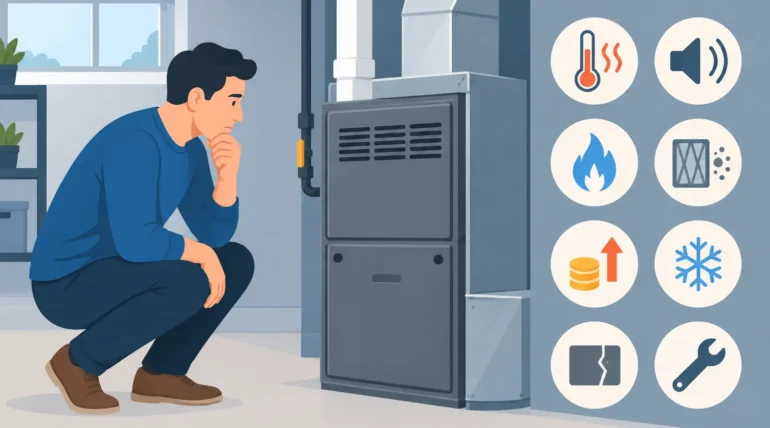
A furnace rarely chooses a convenient time to fail. It usually starts acting up on one of the first cold evenings in Woodland Hills, Northridge, or Canoga Park, when your household needs dependable heat most. Knowing when to replace a furnace can help you avoid emergency decisions, repeated repair visits, and the stress of waking up in a cold home.
Replacement is not automatically the right answer whenever a furnace needs service. Many heating problems have practical repairs. The goal is to understand whether you are dealing with a fixable issue or a system that has reached the point where putting more money into it no longer protects your comfort or budget.
When to Replace a Furnace Instead of Repairing It
Age matters, but it is only one part of the decision. A well-maintained furnace can sometimes provide reliable service beyond its expected lifespan, while a neglected unit may develop major problems much earlier. For most gas furnaces, the conversation about replacement becomes more serious at around 15 years of operation.
A professional diagnosis should come before a replacement recommendation. The condition of the heat exchanger, burner assembly, blower motor, electrical components, ductwork, and thermostat controls all affect the real answer. A trusted technician should explain what has failed, what can be repaired, how long the repair is likely to last, and what replacement would change.
1. Your Furnace Is 15 to 20 Years Old
An older furnace is not automatically unsafe or unusable. However, as systems age, parts can become harder to source, efficiency can drop, and repairs may become more frequent. If your furnace is approaching 15 to 20 years old and needs a significant repair, comparing the repair with replacement is usually sensible.
This is especially true for homeowners who plan to remain in the home for several years. A newer, correctly sized heating system can offer more predictable performance, stronger warranty coverage, and fewer surprise breakdowns.
2. Repairs Are Becoming a Regular Expense
One service call does not mean it is time for a new furnace. But when repairs show up season after season, the costs and disruption add up. Replacing a failed igniter or sensor may be worthwhile. Repeated issues involving the blower, control board, burners, or major safety components deserve a broader discussion.
A useful rule of thumb is to look beyond the current repair. Ask whether the furnace has had multiple breakdowns recently, whether the repair addresses the root cause, and whether other aging components are likely to fail next. Honest advice should include the option to repair when that remains the practical choice.
3. Heating Bills Keep Rising Without a Clear Reason
Higher utility bills can come from rate changes, thermostat settings, air leaks, poor insulation, or duct problems. But an aging furnace can also run longer and use more fuel to deliver the same amount of heat.
If your energy use has climbed even though your heating habits have not changed, schedule an evaluation. A technician can check furnace operation and also look for issues that can make a good furnace perform poorly, such as restricted airflow or inadequate attic insulation. Replacing equipment without addressing the surrounding system may leave savings on the table.
4. Some Rooms Never Feel Comfortable
A furnace that heats the hallway but leaves bedrooms chilly is not always too old. The issue may be duct design, airflow balance, insulation, a dirty filter, or an incorrectly sized system. Still, uneven temperatures become more common when a furnace can no longer move heated air effectively.
If your system runs for long periods but comfort remains inconsistent, have the full heating setup evaluated. Right-sizing matters. An oversized furnace can cycle on and off too quickly, while an undersized unit can struggle to keep up during colder Valley nights.
5. The Furnace Makes New or Persistent Noises
No furnace is completely silent. You may hear a gentle start-up, blower movement, and normal airflow. New banging, rattling, scraping, squealing, booming, or repeated clicking should not be ignored.
Some noises have straightforward repairs, such as a loose panel or worn blower component. Others can point to more serious combustion or mechanical issues. If a noise is loud, sudden, or paired with weak heat, cycling, or unusual odors, arrange service promptly rather than waiting for the next cold spell.
6. You Notice Yellow Flames, Soot, or Combustion Concerns
A properly operating gas furnace typically produces a steady blue burner flame. A yellow or flickering flame, soot around the unit, excess moisture near windows, or persistent exhaust-like odors can indicate a combustion problem. These are not conditions to troubleshoot on your own.
Turn the system off if you suspect a safety issue, make sure carbon monoxide alarms are working, and request professional help. A cracked heat exchanger or significant combustion concern may make furnace replacement the safer long-term decision. Not every warning sign means the heat exchanger has failed, but it always deserves qualified inspection.
7. The Furnace Cycles Frequently or Shuts Down Unexpectedly
Short cycling means the furnace starts, stops, and restarts more often than it should. A clogged filter, thermostat issue, dirty flame sensor, airflow restriction, or overheating condition can cause it. In many cases, a repair restores normal operation.
When short cycling continues after appropriate repairs, or when it is combined with the furnace’s age and other recurring problems, replacement may offer better value. Constant cycling creates extra wear and can leave your home less comfortable even while the system appears to be running.
8. Your Home Has Changed Since the Furnace Was Installed
A room addition, garage conversion, remodeled kitchen, upgraded windows, or new insulation can change your home’s heating needs. The furnace that worked well years ago may no longer be properly matched to the property.
This is a good time to consider replacement, but only after a load calculation. A contractor should not recommend a new furnace based solely on the size of the old one. Clean, right-sized installation is what helps a new system provide consistent warmth and efficient operation.
Repair or Replace? Consider the Full Cost of Waiting
The cheapest immediate option is not always the least expensive path over the next few winters. Continuing to repair an unreliable furnace can mean more service appointments, higher utility use, missed work, and the risk of a complete breakdown during a cold night. On the other hand, replacing a furnace with many useful years left can be unnecessary.
Consider the unit’s age, repair history, safety condition, energy performance, and your plans for the home. Also ask whether the repair comes with a meaningful parts and labor warranty. A clear written estimate should separate immediate repairs from replacement options so you can compare them without pressure.
For rental properties and commercial spaces, the decision also includes downtime. A heating failure can affect tenants, employees, customers, and operations. Planning replacement before a system fails completely gives property owners more control over scheduling and equipment selection.
What a Proper Furnace Replacement Should Include
Furnace replacement is more than swapping one metal cabinet for another. The new equipment needs to be matched to the home, connected safely, and tested under real operating conditions. Poor installation can reduce comfort and shorten the life of even a high-quality system.
Before approving a replacement, expect a contractor to evaluate your existing equipment, airflow, ducts, venting, thermostat compatibility, and the home’s heating load. They should explain efficiency options in plain language and identify any work needed to support dependable performance.
After installation, the system should be commissioned and tested. That includes checking safe operation, temperature rise, airflow, drainage where applicable, controls, and overall performance. Keep your documentation, register qualifying warranties, and schedule ongoing maintenance to protect the investment.
Plan Before the Next Cold Night
The best time to evaluate an aging furnace is while it is still operating, not after it stops during a cold spell. A pre-season tune-up can reveal wear, safety concerns, and declining performance early enough to make a calm, informed decision.
TOP AC provides licensed heating evaluations, repair, and replacement for homeowners and property owners throughout Canoga Park and nearby San Fernando Valley communities. With transparent recommendations and service for all major system types, the focus is simple: repair what makes sense, and replace only when it gives you a safer, more dependable path forward. If your furnace is showing several of these signs, schedule an inspection before comfort becomes an emergency.