
November 24, 2026
How to Improve Airflow at Home for Comfort
When rooms feel stuffy, hot upstairs, or chilly at the far end of the house, learning how to improve airflow home comfort usually starts with a few simple checks. Open paths for conditioned air, reduce restrictions, and have the HVAC system evaluated when basic changes do not solve the uneven temperatures.
Good airflow is not just about feeling a stronger breeze at a register. It helps your air conditioner and heater distribute conditioned air more evenly, can reduce unnecessary run time, and supports cleaner indoor air. For homeowners in Canoga Park and across the San Fernando Valley, that matters when Valley heat pushes a system hard for days at a time.
Start With the Airflow Problems You Can See
Before assuming your AC or heater needs a major repair, walk through the home while the system is running. Compare rooms rather than judging comfort from one thermostat location. A room that is consistently warmer or colder than the rest of the home is useful information for a technician, especially if the problem occurs at the same time each day.
Check that supply registers are fully open and return grilles are not blocked. Supply registers deliver conditioned air into a room. Return grilles pull indoor air back to the system to be cooled or heated again. Both need clear space to do their jobs.
Furniture, thick rugs, curtains, storage bins, and even pet beds can quietly interfere with circulation. Moving a sofa away from a return grille may make more difference than closing vents in rooms you use less. Closing too many registers can raise pressure in the system and create uneven comfort elsewhere.
Use interior doors with airflow in mind
A closed bedroom door can limit circulation when the room has a supply register but no dedicated return path. If that room becomes noticeably warmer in summer or colder in winter, try leaving the door open for part of the day and see whether comfort improves.
This does not mean every door must stay open. It simply helps identify whether the room is being cut off from the rest of the home’s air circulation. Door undercuts and the layout of return grilles can affect results, so the right fix depends on the house.
Replace a Dirty Filter Before It Restricts the System
A clogged filter is one of the most common and preventable causes of weak airflow. As it fills with dust, pet hair, and debris, the blower has to work harder to pull air through it. That can reduce airflow at the vents and put extra strain on cooling and heating equipment.
Check the filter on a regular schedule and replace it according to the filter type, household conditions, and manufacturer guidance. Homes with pets, frequent construction dust, or wildfire-smoke concerns may need more frequent checks. During smoky periods, do not run a system with an overdue filter simply because it still looks mostly white at a glance.
Higher-rated filters can capture more particles, but they are not automatically the best choice for every system. An overly restrictive filter can create its own airflow problem. A qualified technician can help you select a filtration approach that balances air quality and equipment performance. TOP AC can also assess indoor air quality concerns as part of a practical plan for cleaner air.
Keep Registers, Returns, and the Outdoor Unit Clear
Air needs a clear route through the entire system. That includes the outdoor condenser for central AC systems, which releases heat outside. Leaves, dirt, stored items, and landscaping that crowd the unit can affect performance and contribute to longer cooling cycles.
Use this quick home airflow checklist:
- Keep supply registers and return grilles uncovered and free of dust buildup.
- Leave most registers open instead of shutting down multiple rooms.
- Replace dirty filters with the correct size and type.
- Move furniture several inches away from return grilles.
- Keep the outdoor AC unit clear of loose debris and avoid stacking items near it.
- Make sure thermostat settings and fan settings match how you want the system to operate.
Avoid spraying water into electrical components or attempting to open the system yourself. If the outdoor unit is heavily soiled, the blower sounds unusual, or airflow remains weak after filter replacement, schedule professional service.
Improve Airflow at Home by Managing Heat Gain
Sometimes the system is moving air properly, but the home is gaining heat faster than it can shed it. West-facing rooms, upstairs bedrooms, large windows, and poorly insulated attic areas often feel different from the rest of the house during a hot afternoon.
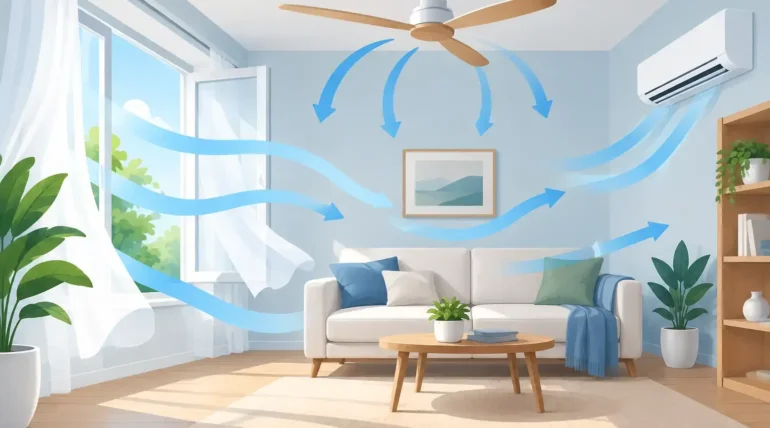
In the San Fernando Valley, intense afternoon sun can make this especially obvious. Start with practical measures: close blinds or shades before direct sun reaches the room, use ceiling fans while occupied, and keep windows closed when outdoor temperatures are higher than indoor temperatures. A ceiling fan does not lower room temperature by itself, but it can help people feel cooler through air movement.
Attic and crawl space insulation also affects how hard the HVAC system must work. When heat enters through the attic, cooling can struggle to keep bedrooms comfortable even if the equipment itself is operating correctly. Insulation should be assessed as part of the whole-home picture, not treated as a guaranteed cure for every hot room.
Know When the HVAC System Needs Attention
If several rooms have weak airflow, the issue may be inside the equipment rather than at individual vents. A dirty indoor coil, blower issue, failing capacitor, control problem, refrigerant-related performance concern, or other mechanical condition can reduce comfort. These are not DIY repairs.
Watch for warning signs such as very little air from multiple registers, new rattling or grinding sounds, a system that runs constantly without reaching the thermostat setting, water around indoor equipment, or a sudden jump in utility use. A professional diagnostic starts from $125 with TOP AC. The goal should be to identify the actual restriction or equipment issue before recommending a repair.
Routine maintenance is useful because it gives a technician a chance to inspect airflow-related components before a small issue becomes a no-cooling call. TOP AC’s heating tune-up is $95, regularly $150. For homeowners who prefer scheduled care, TOP CLUB residential maintenance plans start at $15 per month.
Match the Fix to the Type of Airflow Issue
Not every uneven room needs a new system, and not every comfort complaint is solved by maintenance. The right next step depends on the pattern of the problem.
| What you notice | A likely starting point | When to call a technician | |—|—|—| | One room feels stuffy | Check door position, register blockage, blinds, and room use | The problem continues after basic changes | | Air is weak throughout the house | Check the filter and clear return grilles | Multiple rooms have weak airflow or unusual equipment noise | | Upstairs is hot in late afternoon | Manage sun exposure and assess attic insulation | Cooling cannot keep up despite normal airflow | | Some vents blow warm during cooling | Check thermostat operation and filter condition | The issue persists or the system runs without cooling | | Home feels dusty or smoky indoors | Replace the filter and limit outdoor air entry | You need guidance on filtration or indoor air quality options |
For older homes, airflow can be affected by original design choices, additions, changed room layouts, or equipment that no longer matches how the household uses the space. A good evaluation considers those details. It should not jump straight to a replacement recommendation without checking the basics first.
Do not rely on closed vents as a long-term strategy
It is tempting to close registers in unused rooms to force more air into the areas you use. In some homes, modest adjustments may be acceptable, but closing many vents can increase static pressure and make the system less efficient. It can also create comfort issues in rooms you did not intend to affect.
If you are trying to solve a persistent room-by-room imbalance, document which rooms are affected, what time of day it happens, and whether doors are open or closed. That simple record helps a technician diagnose the issue more efficiently.
Protect Airflow With Seasonal Maintenance
Maintenance is most valuable before peak demand, not after the system stops working on the hottest weekend of summer. During a visit, a technician can inspect key operating conditions, clean appropriate components, verify system performance, and identify concerns that may limit airflow or comfort.
TOP AC Inc. is family-owned, licensed and insured under CSLB #959168, and has served local homeowners since 2011. Our technicians service all major brands and explain findings in plain language, so you can decide what makes sense for your home. If an aging system is the issue, a new-system consultation begins with a Free Estimate, not pressure.
FAQs
Why is airflow weak in one room but normal everywhere else?
A blocked register, closed door, furniture covering a return grille, sun exposure, or room layout can cause a single-room issue. If those basics are addressed and the room remains uncomfortable, a technician can evaluate the system and the home’s airflow patterns.
Should I leave all air vents open?
In most homes, leaving the majority of supply registers open supports balanced system operation. Closing several vents can create excess pressure and may not send the expected amount of air to other rooms.
Can a dirty filter make my air conditioner feel weak?
Yes. A dirty filter can restrict return airflow, making it harder for the system to circulate conditioned air. Replace the filter with the correct size and avoid choosing a highly restrictive option without professional guidance.
Do ceiling fans improve HVAC airflow?
Ceiling fans improve air movement in occupied rooms and can make people feel more comfortable. They do not repair an HVAC airflow problem or reduce the actual room temperature on their own, so turn them off when the room is empty.
When should I call for help with poor airflow?
Call when airflow is weak throughout the home, the system makes unusual noises, cooling or heating performance drops suddenly, or basic filter and register checks do not help. Prompt attention can prevent a small performance issue from becoming a breakdown.
Need Help With Home Airflow?
Need help with home airflow? Call TOP AC at (855) 999-8672 or request a Free Estimate at top-ac.com/contact/. If regular upkeep would give you more peace of mind, ask about TOP CLUB maintenance options. A clear diagnosis and a few targeted changes can make your home feel more comfortable when you need it most.